
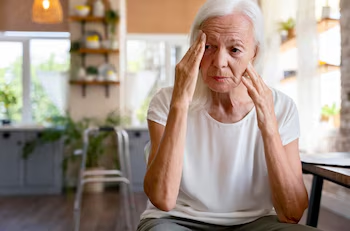
The Alarming Connection Between Loneliness and Dementia Risk
Understanding Social Fragility
Recent research has highlighted the concept of social fragility, a term describing a diminished support network and a lack of trustworthy individuals in one’s life. This phenomenon has emerged as a critical factor influencing the risk of developing dementia in older age. A longitudinal study published in the Journal of Gerontology tracked 851 adults over the age of 70 for 12 years, revealing startling statistics: those who experienced social fragility were 50% more likely to develop dementia.
The Broader Scope of Social Fragility
Unlike mere loneliness, social fragility encompasses various aspects, such as a significant reduction in one’s social circle, emotional closeness, and the absence of reliable relationships. Suraj Samtani, a clinical psychologist at the Center for Healthy Brain Aging, emphasizes that social fragility is not limited to feelings of loneliness; rather, it reflects a deeper disconnect from social interactions.
The Empirical Evidence
As noted by sociologist Brea Perry from Indiana University, society markedly underestimates the importance of social connections on health outcomes. This sentiment is echoed in the aforementioned study, where 260 participants developed dementia, confirming the strong correlation between social fragility and cognitive decline.
A meta-analysis from 2023 further corroborated these findings, demonstrating that individuals with robust social ties exhibit half the incidence of dementia compared to those with weaker connections.
The Challenge of Measuring Social Fragility
Measuring social fragility presents a significant challenge. Current assessments blend various factors, including loneliness, financial instability, and social activities. Perry notes the difficulty in pinpointing which elements most significantly impact cognitive health, making it hard to develop targeted interventions.
The Role of Technology
Given the escalating crisis of caregiver shortages, technological solutions are emerging as potential aids. Samtani’s team has created Viv and Friends, a series of virtual assistants designed for seniors with dementia. These animated figures maintain conversations tailored to the user, potentially fostering social interaction. Pilot tests in Australian residences showed promising results, with one resident reporting mood improvements after engaging in a two-hour conversation with the assistant.
However, experts like Sachin Shah from Harvard Medical School urge caution. While AI can serve as a supplementary support system, it should not replace genuine human interaction. Shah warns that relying solely on technology could diminish the emotional and cognitive health benefits derived from human relationships.
The Need for Human Connection
Both Samtani and Perry agree that technology cannot substitute for the irreplaceable value of direct human interaction. Reminiscence therapy, which involves sharing memories, demonstrates the effectiveness of human connections in enhancing mental well-being. Simple activities, like looking at old photos, can significantly alleviate emotional burdens.
Conclusion: A Call to Action
As we continue to explore the connection between loneliness, social isolation, and dementia risk, it’s essential to acknowledge the role of community and connection in fostering cognitive health. While innovations like AI may assist, they cannot replace the enduring benefits of interpersonal relationships. Public awareness and community support mechanisms are vital to combat social fragility and ultimately reduce dementia risk as society ages.