
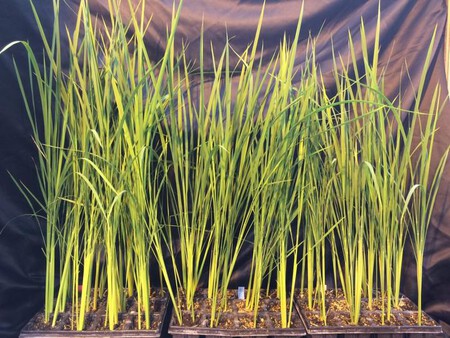
The Moon, Rice, and the Future of Space Agriculture
As humanity gazes at the night sky, the colonization of extraterrestrial bodies has become a pressing topic of exploration. For a considerable time, Mars was perceived as the “manifest destiny” for the United States; however, the Moon has regained its position at the forefront of space exploration initiatives. This renewed focus is primarily driven by the Artemis mission , aimed at re-establishing human presence on our lunar neighbor. The Moon offers an abundance of essential resources, including minerals and energy . However, any long-term human habitation in its environment necessitates a vital breakthrough: the ability to cultivate food on the Moon.
In this context, Italy has introduced a pivotal concept: the main ingredient for lunar sustenance— rice .
Space farming is back on the agenda as NASA, alongside European, Russian, and Chinese agencies, pursues methods to cultivate crops on the Moon. Each nation is examining how to grow food in the lunar soil, which is notoriously hostile due to its lack of essential nutrients. Previous experiments have included using worms and fungi to initiate the fertilization process. The objective is to make the lunar regolith, the layer of rocky debris covering the Moon’s surface, more fertile. Yet, while researchers explore traditional methods, scientists from the Italian space agency are taking a novel approach: they aim to develop dwarf rice varieties through genetic editing to thrive in lunar conditions.
Initiated by Italy’s space agency, this project, known as Miniarrocera , is a collaboration with esteemed institutions such as the University of Milan, Roma Sapienza, and Naples Federico II. The goal is to create a new rice variety called supersenan rice that can grow in microgravity and extremely cramped environments typical of lunar bases. By maximizing production in limited space, researchers are striving to minimize the plant’s height while maintaining its yield. Typically, a rice plant stands between 70 and 150 centimeters tall; the lunar variant is expected to have a maximum size of about 10 centimeters .
The project aims not only for compactness but also for enhanced nutritional value. Scientists are exploring ways to genetically modify the rice to ensure that it provides higher protein content compared to traditional rice varieties.
Dubbed Moon-Rice , this initiative assigns specific responsibilities to each participating university. Milan focuses on isolating mutant dwarf varieties, while Rome seeks optimal genes that maximize performance despite size constraints. Meanwhile, Naples leverages its experience from previous space crop projects, such as the Melissa project from ESA, which simulates closed ecosystems for recycling air and water during long-duration missions.
However, advancing this ambitious project presents significant challenges. While promising candidates like the Japanese dwarf variety Kozo-sumika have been identified, the miniaturization process involves delicate balance. Altering gibberellins , the plant hormones regulating height, could affect overall yield. Finding that equilibrium—achieving dwarfism without sacrificing productivity—requires meticulous laboratory management.
Moreover, technological breakthroughs developed for lunar agriculture often have significant terrestrial applications. The prospect of cultivating a more nutritious, space-efficient, and resistant rice variety has implications beyond the Moon’s surface. This innovation could enhance urban agriculture and improve crop resilience in arid regions on Earth.
As Italy continues to advance its lunar ambitions, it collaborates closely with the European Space Agency (ESA) and other nations with vested interests in lunar exploration. Beyond lunar rice cultivation, Italy has engaged with entities like the Mohammed Bin Rashid Space Center in the UAE, which supports Moon exploration, as well as entering contracts with Thales Alenia Space to develop habitability modules for lunar bases as part of the Artemis program.
In essence, the future of lunar habitation may indeed hinge on the cultivation of this ‘Moon-Rice.’ Who knows? Perhaps risotto will become the delight of lunar dining! As we push the boundaries of human presence in space, it’s clear that sustaining life on the Moon may also bring into play the psychological benefits of greenery and agriculture for astronauts, contributing positively to their mental health during extended missions.
Images: University of Milan, ESA