

Tesla’s Challenge in Europe: Autonomous Driving in Rome
Europe has posed a tremendous challenge for Tesla.
The company has spent years trying to convince regulators of the effectiveness of its Full Self-Driving (FSD) system, yet success still seems elusive. In its bid to prove the capabilities of FSD, Tesla has embarked on creative demonstrations, attempting to navigate urban environments where autonomous driving seems almost impractical today. One striking example of this endeavor is their recent test in the heart of Rome.
Rome: A Test of FSD’s Capabilities
Rome presents a unique challenge for autonomous vehicles. In a video shared on Tesla Europe’s account on X (formerly Twitter), the company showcased FSD’s performance in Rome’s notoriously chaotic streets. They clarified that the demonstration was conducted under supervised conditions, with a driver prepared to take control if necessary.
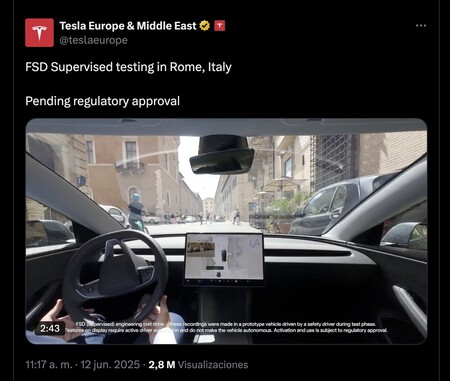
The Journey began with a Tesla Model 3 traversing the historic center of Rome. This route from the Capitol to the Colosseum is characterized by unpredictable traffic and a high density of pedestrians and vehicles.
Seeming Success for FSD
In the video, the results appear promising. It plays at fast speed with an upbeat soundtrack, showcasing the Tesla’s ability to navigate smoothly through various obstacles and challenges encountered along the way. From constant pedestrian crossings to motorbikes zipping by, traffic lights, and unexpected detours, the FSD demonstrated remarkable adaptability. The system skillfully maneuvered around numerous double-parked cars, adding another layer of complexity to the driving experience.
Previous Demonstrations: Lessons from Paris
This isn’t Tesla’s first dance with chaotic traffic. The company previously tested the FSD system at the Place de l’Ètoile in Paris, famously circled by 12 avenues converging at the Arc de Triomphe. This urban maze posed significant challenges not just for human drivers, but equally for Tesla’s autonomous technology. Just like in Rome, the results displayed were impressive, presenting FSD’s competence in navigating high-stress environments.
FSD’s Continued Delay in Europe
Despite these promising showcases, FSD still hasn’t secured approval in Europe. Tesla executives had initially projected that FSD would be available in the European Union by the first quarter of the year. However, that timeline has slipped as regulatory approval remains pending. Elon Musk voiced his disappointment concerning these delays in a recent post on X, marking yet another missed promise for this system that is frequently mischaracterized as Fully Autonomous Driving.
Moving Forward
Recently, Musk mentioned that the company is now awaiting approval from Dutch authorities, which is expected to be pivotal for extending FSD’s availability across Europe. Tesla is also conducting tests in Norway and remains optimistic about future regulatory developments.
Incremental Steps Towards Approval
These ongoing improvements are essential. The United Nations Economic Commission for Europe (UNECE) plays a crucial role in this approval process. In March, an amendment to Regulation 171 was approved, allowing for “system-initiated maneuvers” (SIM) on highways. This upgrade would enable Tesla vehicles to autonomously execute lane changes, moving closer to a hands-off, eyes-on driving philosophy that the current U.S. and Chinese FSD systems provide.
The Slow Pace in Europe
While these advancements are noteworthy, challenges remain. The SIM capability will not extend to city streets, nor will features like “Start FSD from Park,” which allows drivers to activate FSD from a parked position. Such features are pending in Europe, and the existing capabilities like “Actually Smart Summon” are heavily restricted, only functioning when the driver is within six meters of the vehicle. Caution remains the key theme across the European regulatory landscape.
In conclusion, as Tesla continues to strive for regulatory approval for its Full Self-Driving system in Europe, the various challenges it faces are becoming painfully evident. The impressive demonstrations, such as navigating through the chaotic streets of Rome, reveal the technology’s potential, but the regulatory landscape remains a daunting obstacle. The company’s ongoing efforts, while promising, underscore the complexities involved in bringing such advanced automotive technologies to a cautious European market.