
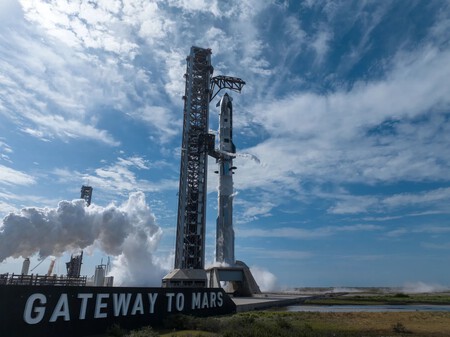
SpaceX, Blue Origin, NASA, and several other companies are all racing to create the largest rocket in history. Currently, SpaceX’s Starship holds the title at 121 meters, while NASA’s Space Launch System (SLS), used for Artemis missions, stands at 98 meters. Despite these lofty aspirations, a recent report raises concerns that pursuing larger rockets may become economically unfeasible beyond a certain point.
A Fuzzy Limit
A report published by The Aerospace Corp. reveals that while larger rockets can initially appear more cost-effective by maximizing payload per launch, this advantage could evaporate when a certain size threshold is surpassed. The savings on launch costs could soon be overshadowed by escalating manufacturing and operating expenses. Even the introduction of reusable rocket technology, as exemplified by SpaceX, may not mitigate these rising costs entirely. The report does not pinpoint the exact size where costs begin to increase, but it indicates the potential for a switch from a decreasing to an increasing launch price per kilogram.
Learning from Aviation: The Airbus A380 Example
The report draws parallels with the Airbus A380, a superjumbo aircraft seen as a technical achievement but ultimately a commercial failure due to high operational costs compared to smaller aircraft. Just as the aviation industry learned that bigger does not always equate to better, the space industry may face a similar hard truth regarding oversized rockets.
When Large Rockets Are Necessary
Despite the potential pitfalls, large rockets have their place in future space endeavors. As payload demands grow, massive rockets will become vital for launching satellites, broadband constellations, and orbital data centers. However, the real question remains: will there be enough demand to justify the investments of multiple companies in developing large rockets?
Current Landscape and Future Prospects
Currently, only two operational rockets can lift payloads exceeding 50 metric tons into low Earth orbit: SpaceX’s Falcon Heavy and NASA’s SLS. Other contenders, including SpaceX’s Starship, Blue Origin’s New Glenn, and China’s Long March 9 and 10, are still in developmental phases. Notably, Falcon Heavy has conducted just 12 flights since its debut in 2018, hinting that the appetite for heavy-lift vehicles may not be as robust as once anticipated.
Starship would currently be the largest rocket
As companies vie for the title of the largest rocket, it is crucial they consider all variables rather than merely chasing size. The aviation industry has demonstrated that bigger is not necessarily better, and space exploration may face similar challenges. The future will reveal whether the demand aligns with the ambition, or if many will find themselves over-committed to colossal rocket projects that fail to deliver on profitability.
Images | NASA | SpaceX