
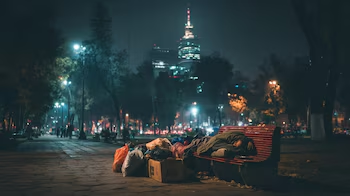
The Ombudsman’s Office Initiates Support for the Homeless in Buenos Aires
Overview of New Operations
The Ombudsman of the City of Buenos Aires has launched regular night operations aimed at assisting the homeless population during the harsh winter months. This significant initiative deploys professional teams to various communities, providing immediate assistance and reinforcing local state and community resources. The first outreach occurred on June 29 in Commune 13, marking a proactive step in addressing homelessness amid increasing winter cold.
Rising Numbers of Homeless Individuals
Recent statistics reveal the alarming rise in the homeless population in Buenos Aires. As of November 2025, over 5,000 individuals were reported as homeless, a stark increase from the 2,573 reported in 2021. This growth has transformed homelessness into a structural issue, necessitating urgent public discussion, particularly during winter when temperatures drop.
Coordinated Support Strategies
The Ombudsman’s Office emphasizes the importance of establishing institutional channels for listening and support. Their strategy includes coordination with the city’s network of shelters and inns to ensure comprehensive aid. Importantly, this intervention is not a temporary response limited to the cold season; it aims for sustained action against homelessness.
Maria Migliore, an analyst and former official, has highlighted that care facilities in the city have expanded significantly. The “Buenos Aires Presente” program, in operation since 2016, remains crucial in providing ongoing support across various governmental administrations.
Broader Context of Homelessness
A recent report from the Foundation for Comprehensive Human Development (DHI) indicates that homelessness is increasingly affecting diverse populations. The document warns that homelessness is no longer restricted to specific demographics; it has become a social crisis impacting numerous sectors of society.
The findings show a shift towards greater diversity among the homeless, now including more older adults without income, women facing domestic violence, families evicted from homes, and adolescents distanced from supportive family structures.
Economic Factors Driving Homelessness
Architect Agustín Alessio, a member of the DHI Foundation, states that many individuals are on the streets due to straightforward economic factors like loss of employment or inability to pay rent. The situation is exacerbated by a rising trend of renting, with around 21% of households renting property, leading to precarious living conditions across Buenos Aires.
Disturbingly, 54% of survey respondents reported using psychoactive substances, with 45.3% indicating increased consumption since becoming homeless. This is often a symptom of the underlying issues leading to homelessness rather than a direct cause.
Conclusion
The efforts of the Ombudsman’s Office and the insights provided by recent studies underscore the urgent need for comprehensive, continual support for the homeless in Buenos Aires. As the city faces increasing numbers of individuals without stable housing, innovative and humane solutions are imperative to address this multifaceted societal issue.