
The Revival of Tesla’s Dojo Project
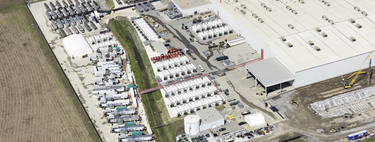
Elon Musk continues to be a pivotal figure in the field of artificial intelligence (AI), firmly positioning Tesla among the industry’s leaders. While giants like Meta, Alphabet, Microsoft (with OpenAI), and Oracle dominate data centers, Musk’s own xAI is making strides with its ambitious Colossus Memphis project. Featuring an impressive 100,000 NVIDIA H100 chips, this facility aims to train the latest AI systems, but Musk’s overarching goal is to achieve technological independence.
Dojo: From Ambition to Reality
Initially, the Dojo project was conceived as a cutting-edge supercomputer to enhance Tesla’s autonomous driving capabilities through advanced neural network training for its Full Self-Driving (FSD) system. Despite investing over $1 billion and five years into its development, Tesla paused the project due to complications and the high costs inherent in scaling the specialized D1 chip architecture.
However, a revival is on the horizon. With key changes to its strategy, Tesla aims to relaunch Dojo under a new guise—Dojo 3—adopting a radically different approach.
Reimagining the Architecture
The new architecture of Dojo 3 will simplify the previous complex network by incorporating a modular design that allows for multiple AI chips to be installed on a single board. This shift not only reduces wiring complexity but also enhances heat dissipation and minimizes installation space requirements. Greater efficiency means that more chips can effectively boost computational power while decreasing energy consumption.
Strategic Implications for Autonomous Driving
Despite the mixed results surrounding its autonomous driving claims, Tesla sees FSD technology as a cornerstone of its future growth, especially with plans for the much-anticipated ‘robotaxis.’ Expected to roll out in 2026, these vehicles will operate without traditional steering wheels or pedals.
Musk’s move to make Dojo 3 less specialized and more versatile—with the AI5, AI6, and AI7 chips—revolves around enhancing both training and inference capabilities in a cost-effective manner. This creates a sustainable pathway for Tesla’s software-driven aspirations.
The Role of Advanced Chip Manufacturing
Recent developments indicate that Tesla is collaborating with Samsung to manufacture its next generation of chips, including the AI6, through a substantial contract valued at $16.5 billion. This partnership underscores Tesla’s commitment to securing its foothold in the highly competitive AI landscape.
Future Prospects and Operational Efficiency
With Musk’s vision for Dojo 3 gradually coming to fruition, the implications for Tesla’s robotics and AI training efforts are profound. The enhanced efficiency and modular capabilities of the new architecture are expected to accelerate the company’s advancements in autonomous technology.
As Tesla continues to pivot in a rapidly evolving tech landscape, the revival of the Dojo project illustrates Musk’s adaptability and forward-thinking approach, striving for innovation while aiming for cost-effective solutions. The evolution of this supercomputing project not only reinforces Tesla’s position in the AI domain but also promises to push the boundaries of autonomous driving technology.
Images sourced from xAI and Steve Juvetson.