
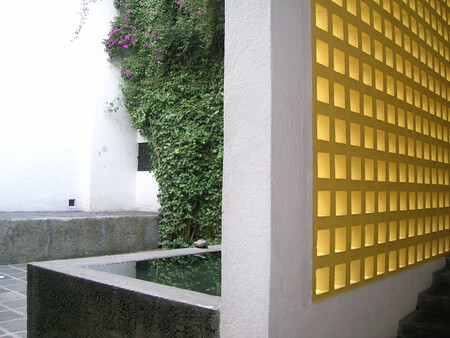
A New Approach to Beating the Heat
In 1973, during the oil crisis, many countries realized that cooling buildings had become an energetic luxury. This prompted a resurgence of interest in bioclimatic architecture, which emphasizes practical solutions such as patios, thick walls, shade, and cross ventilation. Remarkably, these ideas were already at the forefront of one architect’s vision decades earlier. Architect Luis Barragán believed that a home should serve as a serene refuge, shielding its inhabitants from the harshness of the outside world.
Heat is Perceived, Not Just Measured
For years, our response to rising temperatures has been predictable: lower the blinds and turn on the air conditioning. This mechanical and costly approach falls short of addressing the deeper issue of how we perceive heat. Barragán’s work in Mexico City pointed out that comfort is not solely a matter of temperature, but also how the body experiences its environment.
His designs, characterized by vibrant pink, yellow, and blue walls and deep shadows, explore a concept now gaining traction in neuroarchitecture: that color, light, and material can alter our perception of comfort. Advancing beyond merely cooling the air, his architecture enhances our overall experience of space.
The Role of Color in Cooling Spaces
Barragán understood that in his work, color served not just as decoration but as a structural tool. The carefully chosen shades of pink, ocher, and blue were designed to respond dynamically to the changing light of the day, influencing the emotional temperature of the space. For instance, a pink wall may seem to radiate heat under the intense Mexican sun, while a deep blue patio can evoke the tranquil sensation of the sky.
Designing for Sensory Experience
Barragán’s Studio House, built in 1948 and now a UNESCO World Heritage Site, exemplifies his belief in architecture as a sensory laboratory. The design integrates thick walls, closed patios, interior gardens, and water features to modulate the bodily experience. UNESCO recognizes this deep interplay between light, space, and matter as a significant contribution of the 20th century.
In Barragán’s homes, comfort arises from a balance of elements rather than reliance on technology. He distrusted modern glass facades, arguing for the concept of “half-light.” This approach promotes spaces that provide shade and shelter, necessary for rest and contemplation.
Tradition Meets Modern Needs
Many concepts found in Barragán’s designs have historical roots in centuries of vernacular architecture. Features like painted stucco, thick walls, and interior patios were tools for climate control long before air conditioning existed. By merging these traditional methods with a modern aesthetic, Barragán demonstrated that effective cooling could be a beautiful and welcoming experience.
Science Supports Barragán’s Ideas
Recent studies in emotional architecture reveal that light and color can regulate our moods and impact thermal perception. For instance, certain shades can make a room feel cooler or warmer without changing its actual temperature. This aligns with Barragán’s design philosophy, where sensory perception plays a pivotal role in comfort.
A Sustainable Future in Architecture
Today, as cities face rising temperatures and increased energy demands, Barragán’s architectural achievements offer invaluable lessons. They remind us that effective cooling does not always equate to lowering the air temperature. Instead, it can involve controlling light, utilizing appropriate materials, and choosing colors wisely.
His architecture represents a conversation with contemporary design challenges, advocating for a return to intentional, thoughtful practices that work in harmony with nature.