
Political Landscape in Spain: Critique and Reactions
The Spanish political scene is currently witnessing heightened tensions and criticisms, particularly aimed at the current Prime Minister, Pedro Sánchez. Miguel Tellado, the General Secretary of the People’s Party (PP), has vocally denounced Sánchez for his perceived failure to address the challenges facing his administration while concurrently embarking on a notable tour throughout Latin America.
Tellado’s criticisms come at a time when Sánchez has been emphasizing threats to democracy. In response, Tellado claimed that the true threat lies within Sánchez himself. He has called for early elections, asserting that “everything that surrounds the socialist leader is a sewer,” signaling a deep-seated frustration with the current political climate.
The Inability to Govern
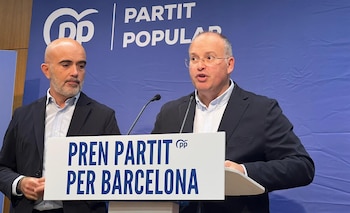
In a press conference held in Barcelona alongside Daniel Sirera, the leader of the PP in the city council, Tellado unequivocally stated that Sanchez’s governance is in a state of crisis. He described the Prime Minister’s recent attempts at passing decrees as futile, stating that “his shipwreck is absolute, it is complete.” The implications of these statements suggest that the PP believes Sánchez’s administration has lost its footing, making significant strides toward paralysis in governance.
Tellado went on to elaborate that Sánchez appears more defeated than ever, asserting that he is “more sunk now than before.” His comments underscore a perception that Sánchez is grappling with significant political pressures, which are further exacerbated by a turbulent social environment.
Controversies in the PSOE
The situation has evolved beyond just elections; it is also marred by controversies within the Spanish Socialist Workers’ Party (PSOE). Tellado pointed to the embarrassment the party feels regarding former officials, including Santos Cerdán, and the Minister of Finance, María Jesús Montero. Following the July 23 elections, it has been reported that Sánchez’s wife, Begoña Gómez, was erased from a celebratory video that showcased party officials. Tellado remarked, “The erase that the Spaniards want is not that. The erase that the Spaniards want is the deletion of Sánchez himself,” indicating that public sentiment is largely against the current socialist leadership.
The Dignity of Resignation
In another notable occurrence, Tellado commended the resignation of Noelia Núñez, who stepped down from her position as the secretary of mobilization and digital challenge of the PP amidst controversies surrounding her past studies. This move was portrayed as an act of moral strength, with Tellado expressing that many within the socialist ranks envy her dignity and capacity for self-reflection.
The implications here are significant, as they highlight a perceived moral divide between the PP and the PSOE. Tellado emphasized that “between the PSOE and the PP separates a moral ocean.” This assertion not only critiques the PSOE’s leadership but also aims to strengthen the public image of the PP as one that values integrity and accountability.
Public Sentiment and Future Prospects
Public opinion is crucial in shaping the future of Spanish politics. With general elections looming, the political strategies of both major parties will likely intensify. The PP is leveraging the internal issues within the PSOE to bolster its position, projecting stability and resilience in contrast to what they describe as a crumbling administration.
As the political landscape evolves, voter sentiment will play a crucial role. The populace appears increasingly weary of political scandals, incompetence, and perceived hypocrisy. The call for a change is palpable, with many citizens expressing the desire for a political environment characterized by accountability, transparency, and effective governance.
Recent remarks from both sides signal that the Spanish political theatre is far from reaching a resolution. The dissatisfaction with Sánchez’s leadership is likely to fuel demands for a shift in power dynamics, accompanied by greater scrutiny of political figures and parties as they prepare for electoral battles. The outcome remains uncertain, but the stakes are undeniably high as Spain approaches an era of critical decision-making.
In conclusion, as the political climate continues to shift and evolve in Spain, the future of governance and leadership remains a topic of intense debate and speculation. The calls for change echo through the electorate, and the implications of internal conflicts within major political parties will continue to shape the narrative in the weeks and months ahead. The Spanish political landscape is at a crossroads, with significant potential for transformation amidst a backdrop of controversy and public demand for integrity.