
Disconnection Between Politicians and Citizens
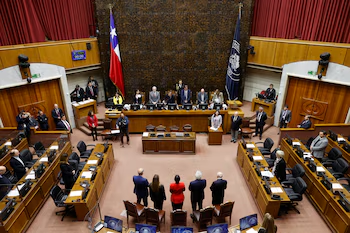
A recent survey conducted by the University of the Andes in collaboration with You Influence reveals a troubling disconnect between the Chilean political class and the everyday concerns of its citizens. The study found that 8 out of 10 Chileans believe politicians do not connect with the needs of ordinary people. This sentiment of disaffection permeates through all socioeconomic strata, indicating a widespread disconnection across the country.
Survey Findings
When respondents were asked, “Do you think politicians understand people’s problems?”, a staggering 81% answered negatively. Only 14% felt that politicians understood their issues, while 5% were unsure or preferred not to answer.
This disillusionment is especially pronounced in specific regions, with 86% of those in the north expressing skepticism, dropping to 77% in the center, and rising again to 82% in the south. Socially, the concerns resonate across various groups, with 84% of individuals from group D, 81% in E and C3, and 74% of the most affluent (ABC1) reflecting a similar sentiment.
The Impact of Disaffection
Consequences on Democratic Engagement
According to Guillermo Bustamante, a professor at the Faculty of Communication at the university, this disinterest poses a major challenge for democratic regimes. He notes that citizens are increasingly doubting the worth of political processes, leading them to disengage from vital democratic practices such as voting. This disengagement potentially explains the rising enrollment in mandatory voting systems, which aim to counteract this growing apathy.
Emotional Outlook of Citizens
The survey also explored the emotional responses of Chileans regarding the future. 48% reported feeling uncertainty, followed by hope (20%), fear (15%), disappointment (9%), trust (5%), and indifference (2%). These emotional responses speak volumes about how Chileans perceive their current political climate.
Major Concerns of Chileans
Security at the Forefront
When asked about pressing issues, security emerged as the primary concern for 48% of interviewees, closely followed by economic issues, specifically pensions, at 7% each. Other concerns included inequality (4%), health (2%), housing (1%), and environmental issues (1%).
Challenges for the Incoming Government
Looking ahead, 25% of the respondents emphasized controlling inflation and curbing the rising cost of living as a top priority for the new government. Job creation ranked second (21%), followed by strengthening social programs (14%) and salary improvements (14%).
Family and Economic Fears
Among their concerns, 37% expressed fear for their family’s safety, and 17% were stressed about their insufficient salaries. Worries about retirement, medical treatment costs, and job security were also prevalent, showcasing a general unease about economic stability.
Conclusion
The survey results paint a stark picture of the relationship between Chilean citizens and their political leaders. As disaffection grows, the demand for politicians to connect meaningfully with their constituents intensifies. Addressing these concerns not only requires immediate action but also a shift in the way politicians engage with the people they serve. With a polarized election on the horizon, the onus is on political leaders to bridge this gap and restore trust in the political process.