
Unveiling Spotify Wrapped 2025
The launch of Spotify Wrapped 2025 brought a groundbreaking feature that captivated millions: the sound age function. This new tool ignited curiosity by assigning users a musical age often surpassing their actual age.
This unique phenomenon reflects the growing nostalgia for classic music from past decades, pointing to how memories shape listening habits, and sparking lively discussions across social media platforms.
A Fresh Approach to Music Summaries
In contrast to previous editions that focused primarily on listening minutes and favorite artists, the 2025 Wrapped introduced sound age as an innovative metric. This calculation does not represent biological age but instead derives from the release years of the most frequently played songs and each user’s listening profile.
For instance, users who engaged heavily with rock classics, 80s pop, or 90s hits were categorized with a musical age reflecting those who were teenagers during those iconic times.

The Calculation Behind Sound Age
The method for calculating the sound age involves analyzing songs played from January to mid-November 2025. Spotify identifies the five-year period of most intense interaction and compares it to the listening patterns of individuals within the same real age range.
This approach is based on the “reminiscence bump” hypothesis, highlighting that adolescent musical preferences tend to be the most enduring. For example, a 20-year-old primarily listening to music from the late ’70s may find themselves assigned a sound age of 63.
As expected, this sparked a wave of reactions. Young people boasting sound ages of 60 or 70 took to social media to share their disbelief, while parents with shared accounts were astonished to find results reflective of Generation Z.

Impact on Culture and Community
The trend quickly escalated, with spirited discussions revolving around whether Spotify’s algorithm “aged” users or rejuvenated them based on their music choices. This feature highlighted the diversity in musical preferences and nostalgia’s pervasive impact in digital culture.
Analysis of the high sound ages revealed a preference for classic rock, 80s and 90s pop, jazz, disco, and folklore, which naturally skewed many users’ musical ages upward.
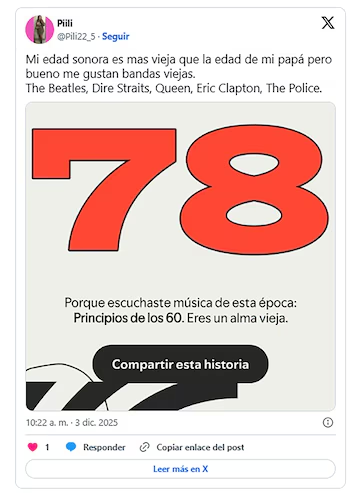
Those who leaned towards newer music from the 2000s or recent hits found their sound ages aligning more closely with youth today. The viral sharing of results led to memes and humorous takes, prompting greater reflection on the intertwining of technology, memory, and popular culture.
Conclusion: A Reflection of Musical Nostalgia
Spotify Wrapped 2025 also came with a suite of enhancements, including age-based taste comparisons and the Wrapped Party function, allowing friends to exchange preferences. The traditional metrics, such as the top songs and artists, were complemented by interactive visuals that made it easier to navigate and share findings.
This edition firmly established the importance of musical nostalgia, providing users with a unique lens through which to view their musical journeys over the past year, illustrating music’s power to connect generations and build bridges between past and present.