
The Grim Demographic Reality in South Korea
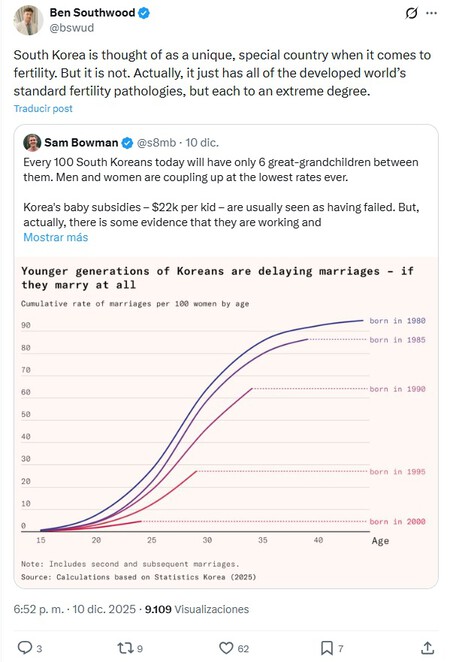
South Korea’s demographic statistics tell a disheartening story. With declining birth rates touching critical levels, the nation is facing a future characterized by stark projections: if current trends persist, for every 100 contemporary South Koreans, there will only be six great-grandchildren. This could be a shocking realization for a society that once celebrated rapid growth and modernization.
Fertility Rates on a Downward Spiral
The fertility rate in South Korea has plummeted to alarming figures. In 2023, the nation’s fertility rate was reported at a mere 0.7, a far cry from the 1.5 recorded at the beginning of the 21st century, and an even starker decline from the 4.5 seen in the 1970s. Despite a marginal increase projected for 2024—rising to 0.74—this remains insufficient. The critical threshold known as the ‘replacement rate’ is set at 2.1 children per woman, a target South Korea has continually missed.
The Consequences of Declining Birth Rates
The implications of such low birth rates are profound, affecting society, economy, and even national defense. With projections suggesting that the South Korean population could fall from approximately 51.68 million to just 15.73 million by 2125, the current demographic crisis amplifies. Former President Yoon Suk Yeol declared a “national demographic emergency” in 2024, showcasing the urgency of addressing this crisis. South Korea is transitioning into a “super-aged” society, where at least 20% of the population is over 65 years old.
Understanding the Problem
Several factors contribute to the declining birth rates, including:
- The economic burden of raising children in a highly competitive society.
- Career pressures that often deter women from starting families.
- Cultural shifts in gender roles affecting family planning.
These challenges are intertwined with a legacy of antinatalist policies from past decades that have shaped public attitudes toward childbirth.
Exploring Solutions
So, how can South Korea approach this demographic crisis? Nation-wide strategies have included:
- Encouraging higher birth rates through financial incentives for families.
- Emphasizing the importance of work-life balance to attract more parents.
- Contemplating immigration as a potential solution, though current immigration rates are low, with foreigners constituting only 5.1% of the population.
There have been signs of improvement in birth rates following these measures, yet skepticism remains about whether they can achieve a significant demographic turnaround.
A Call to Action
The looming demographic crisis in South Korea necessitates immediate and rigorous action. If the country fails to adapt, it risks facing not just a dwindling population, but economic stagnation and social challenges as well. Addressing the obstacles to parenthood will be crucial for creating a thriving future for generations to come.