
The Surge in Car Prices
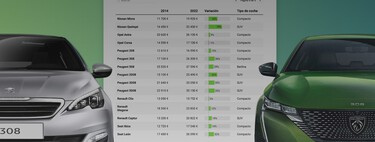
Have you noticed the dramatic rise in car prices? According to Xataka, from 2014 to 2022, car prices skyrocketed by around 50% after accounting for an inflation rate of approximately 18%. This spike is most pronounced in the mid-range category, with vehicles priced between €20,000 and €30,000 seeing some of the highest increases. Similarly, entry-level vehicles priced between €15,000 and €20,000 have also become significantly more expensive, averaging close to a 20% increase.
The Dacia Logan’s Cost Escalation
Among the cars affected by these price hikes is the Dacia Logan, once heralded as the cheapest car on the market at €9,150 in 2014. Fast forward to 2023, and its price has surged by almost 30% after adjusting for inflation. Dacia’s current entry-level model, the Sandero, retails at €13,520, making it increasingly difficult for budget-conscious consumers.
Impact of New Regulations
The European Union’s enforcement of new safety regulations has further compounded the issue. Modern cars are now required to include features like rearview cameras, emergency braking, and speed alerts, significantly increasing their base prices.
Dacia’s Shifting Image
This rapid escalation in prices has forced Dacia to reevaluate its market positioning. The company moved away from its original tagline of providing “the same as any other car but for just €6,000.” Denis Le Vot, Dacia’s former CEO, openly criticized the EU regulations, highlighting that many drivers disable these new features for cost reasons. Consequently, Dacia has shifted focus, evolving its brand identity to one that emphasizes “more for less” rather than just affordability.
A Revolutionary “Non-Car” Concept
In a fascinating twist, Dacia plans to venture into the realm of “non-cars.” They intend to launch a small electric vehicle designed to compete with the Citroën AMI, marking a significant shift in their product strategy.
Introducing the Electric Quadricycle
Rumored to be priced at €5,990, this upcoming vehicle would be a heavy quadricycle with a top speed of 45 km/h and a range of around 80 kilometers. Such vehicles cater not only to younger drivers over 14—who need an entry-level transportation option—but also to older individuals looking for efficient urban mobility. This initiative may be part of Dacia’s larger goal to introduce more affordable electric options tailored for city environments.
The Future of Affordable Electric Vehicles
Renault and Dacia are both at the forefront of pushing affordable electric options in Europe, potentially creating a niche category known as “eCar.” This new automotive segment would feature small, economical electric vehicles devoid of unnecessary driving aids, offering a simplified solution for urban transportation.
Challenges Ahead
However, significant challenges lie ahead. Can Dacia manufacture a vehicle priced lower than the Citroën AMI — produced in Morocco with minimal component complexity? Additionally, is there a substantial market for low-speed, electric quadricycles? While cities appear to be a lucrative target, European drivers may differ from their Japanese counterparts who widely embrace Kei cars.
As Dacia navigates this evolving market landscape, the introduction of their electric quadricycle could well be a game-changer in affordable urban mobility.