
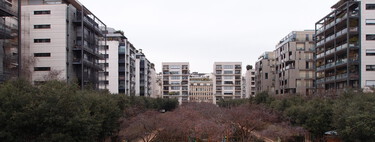
Transforming the Boulevard Périphérique: Lessons from Madrid’s M-30
The Boulevard Périphérique serves as Paris’s answer to Madrid’s M-30, a ring road stretching 35 kilometers designed in 1958 to alleviate city center congestion. The intent was clear: facilitate faster travel around the congested heart of the city. However, both infrastructures have since evolved into problematic urban highways.
Shared Challenges of Urban Highways
Like Madrid, the Boulevard Périphérique has succumbed to issues such as pollution from vehicular emissions and noise. Additionally, the physical barriers created by these highways present social challenges, complicating pedestrian and cyclist access and disrupting community cohesion. While Madrid has recently tackled some of these concerns by implementing projects like Madrid Río, which involves burying sections of the M-30, Paris grapples with its own share of urban design dilemmas.
Historical Context: From Defensive Barriers to Urban Walls
The Boulevard Périphérique overlays the remnants of the old Thiers wall, a defensive structure rendered obsolete by the 20th century, ultimately forming a new barrier for those living in nearby suburbs. As the city weighs its options for this freeway, proposals have emerged to transform it into a pleasant boulevard, complete with trees, pedestrian crossings, and dedicated bike lanes—an initiative that aligns with broader trends toward urban sustainability.
New Aspirations under Leadership Changes
During Anne Hidalgo’s tenure as mayor, significant strides were made to reduce traffic in central Paris. Initiatives included enhancing the bike lane network and restricting access for SUVs in certain high-traffic areas, including routes leading to iconic locations like the Eiffel Tower. Hidalgo’s administration laid the groundwork for transforming the highway into a proper urban boulevard.
A Vision for a Sustainable Future
The new mayor, Emmanuel Grégoire, has built upon these ideas, pushing further for significant reductions in urban vehicle traffic. Key proposals include lowering speed limits to 30 km/h and maintaining extensive bicycle lanes. Environmental groups are actively supporting these changes, advocating for pedestrian-friendly traffic signalization instead of elevated crossings, thus fostering a more interconnected urban landscape.
Social Infrastructure and the Aim of Inclusivity
The reconception of the Boulevard Périphérique highlights a long-standing commitment from Parisian environmental and socialist factions, addressing not only traffic flow but the social disparities looming above the city. This project aims to bridge the gap between those living inside and outside the ring road, alleviating the urban divide. As discussed in a Guardian article, the shifts are necessary to tackle the chaotic daily traffic bolstered by outdated infrastructure.
Looking Ahead: Challenges and Opportunities
The current government intends to realize this ambitious transformation within its mandate, aiming for significant changes in the early years of the next decade. However, concerns over bureaucratic challenges could impede progress, as highlighted in mentions by The Figaro.
As cities across the globe grapple with the adverse effects of urban highways, the efforts to convert the Boulevard Périphérique into a revitalized urban space may hold lessons for other metropolitan areas. Balancing traffic management with promoting sustainable practices will remain key in reshaping urban environments.
Photo credits: Romain DC on Wikimedia, Johan Mouchet.