
Ryanair’s Response to AENA’s Airport Rate Increase: A Strategic Withdrawal
The Irish airline Ryanair has reacted strongly against the proposed 6.57% increase in airport rates that AENA plans to implement in 2026. The rates are set to rise from 10.35 euros to 11.03 euros , prompting demands from Ryanair for the Spanish government and the National Commission of Markets and Competition (CNMC) to reject this hike. The airline’s warnings are severe, with threats to cut regional routes and seat capacity if effective measures are not put in place to counteract the rate increase.
A Threat That Is Not New. Ryanair has a history of using such threats against regional airports as a bargaining chip. Earlier this summer, the airline took significant action by completely withdrawing services from Valladolid and Jerez , while also reducing operations in Vigo , Santiago , Asturias , Santander , and Zaragoza . In total, this led to the elimination of 800,000 seats across these airfields between April and October. Interestingly, while Ryanair slashed services in these regions, the airline has still managed to maintain growth on a national level.
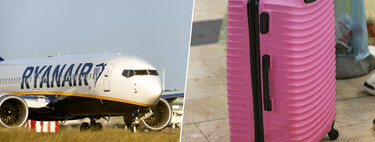
<img alt="Ryanair's workers promote their baggage policies while managing to keep costs low" width="375" height="142" src="https://i.blogs.es/0f1e29/ryanair/375_142.jpeg"/>Keep Leading. Despite these strategic withdrawals, Ryanair continues to hold its position as the dominant player in the Spanish airline market . In the first half of the year, the airline transported 32.64 million passengers in Spain—an increase of 6.6% compared to the same period last year. This impressive figure solidifies Ryanair’s status as the company with the highest traffic volume in the country, widening its lead over competitors by nearly 10 million passengers .
Beyond Rates. While Ryanair cites the rise in airport fees as the primary reason for its threat to regional routes, the reality is multifaceted. The airline is currently embroiled in a legal battle with the Spanish government over a monumental 107.78 million euro fine related to its hand luggage policies. This fine represents the largest in Spanish business history and is part of a larger enforcement action that also includes Vueling and Easyjet , which were penalized for similar practices.
The Strategy Behind the Pulse. Ryanair’s withdrawal from regional airports aligns perfectly with its overall business strategy . These smaller airports depend heavily on the connectivity that the Irish low-cost carrier provides. A striking example is Valladolid , which saw its passenger numbers plummet from nearly 100,000 in the first half of 2024 to just 41,725 in the same period of 2025. The company’s understanding of the weight its presence carries gives it significant leverage in negotiations.
The Coming Answer. The CNMC is expected to announce its decision on the proposed tariff increase before the end of the year. Ryanair is advocating for the continuation of the fee freeze that has been in place for the last decade, arguing it’s essential for regional connectivity and economic viability. Conversely, AENA defends its position by asserting that the new rates remain internationally competitive and that exceptions cannot be made. The outcome of this dispute will significantly impact regional air travel in Spain, and whether Ryanair will indeed reduce its operations remains to be seen.
Cover image | Ryanair
In conclusion, Ryanair’s current path of action reflects a complex interaction between regulatory policies, regional needs, and corporate strategy. As the airline pushes back against rising costs, the consequences for regional airports could be profound. With passenger connectivity at stake, all eyes will be on the CNMC’s forthcoming decision to gauge the future landscape of air travel in Spain.