

The verbal escalation between Washington and Moscow intensified after the statements of Dmitri Medvedev, former Russian president and current vice president of the Security Council, reacting strongly to the ultimatum launched by the United States: stop the offensive in Ukraine within ten days or face new sanctions. Medvedev described the threat as “a step towards war,” reminiscing about a Cold War era filled with hostility and suspicion.
The diplomatic trigger is evident in Medvedev’s reply, which included references to the infamous Russian nuclear system known as Dead Hand, designed to guarantee reprisals even if the Kremlin’s leadership were eliminated. Far from easing tensions, Trump’s response to Medvedev was to assert that the Russian had to “monitor his words,” warning that he was entering “a very dangerous territory.”
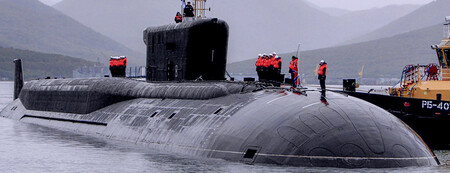
In this context, the US president ordered the repositioning of two nuclear submarines to “appropriate regions.” This was an unusually public gesture intended to convey firmness against what he described as “incendiary” comments.
The nuclear background of this announcement carries significant symbolic weight, as the movements of American ballistic submarines are rarely made public. Analysts like James Acton from the Carnegie Endowment emphasized that the United States already maintains constant nuclear deterrence capabilities in both the Atlantic and Pacific. This suggests that the deployment was more about political posturing than a substantial alteration of military readiness.
Medvedev’s mention of the Dead Hand system underscores the increasing emphasis on nuclear rhetoric by Russia since the onset of the invasion of Ukraine. Departing from his previous image as a reformist leader between 2008 and 2012, Medvedev has adopted a more aggressive tone on social media, frequently invoking the atomic arsenal as a means of intimidation during this time of military and diplomatic stalemate.
The origin of an apocalyptic weapon lies in the Cold War logic of deterrence. The idea of a Final Judgment Device, an automatic mechanism ensuring nuclear retaliation even in the event of a total devastation, seemed for decades to be a science fiction fantasy. However, the Soviet Union brought this to life in 1985 under the name of Perimetr system, known in the West as Dead Hand.
The system’s principle was horrifyingly simple: even if an enemy launched a perfect first attack, annihilating Moscow’s political and military command, an autonomous system would ensure a nuclear response, condemning the aggressor in turn. In essence, it symbolized the doctrine of mutual assured destruction taken to an automatic scale where no human decision could halt the sequence once it began.
The strategic motivation of Moscow for the system emerged from heightened Soviet vulnerability in the 1980s. The increasing accuracy of American missiles launched from submarines reduced the warning time from half-an-hour to just three minutes, dangerously undermining the ability to mount a counterattack before destruction. In light of this, traditional deterrence mechanisms from the Cold War faced threats, as Washington might imagine it could feasibly deliver a disabling first strike.
To restore equilibrium, the Kremlin designed the Perimetr. When activated during periods of tension, it would remain passive, employing seismic, radiological, and atmospheric pressure sensors to discern whether the homeland was attacked. Only after confirming a loss of contact with the General Staff would the system grant launch authority to operators located in an armored bunker, thus circumventing the need for intact command structures.
The mechanism behind this system was a unique missile: 15P011. This missile was not armed with a nuclear head but carried a radio transmitter designed to withstand radiation. Upon launch from a fortified silo, it would traverse the country, disseminating launch orders to ICBM silos, strategic submarines, and bombers, thus replacing communications suspected to have been destroyed.
This system ensured a mass retaliation against pre-programmed targets. The decision-making process was distilled into a sequence of conditions: if an attack was detected, if communication with the high command was lost, and if the signals hadn’t been restored after a prudent delay, then retaliation was inevitable. A single operator, ensconced in his underground position, could unleash the entire Soviet arsenal.
Between the secret and the paradox, the true purpose of Perimetr was not solely to intimidate the United States; it remained shrouded in secrecy for years, only revealed to the world in 1993. Instead, it served as a form of psychological insurance for Soviet leaders themselves, allowing them to refrain from hasty reactions to ambiguous signs and providing time to assess whether a perceived attack was nothing more than a radar error or a flock of birds misconstrued as missiles.
Validity of the Perimetr system has endured, as it is believed that the concept remains operational in modern Russia, having been updated post-USSR dissolution. Its existence highlights the precarious line between strategic stability and global annihilation: a device that, hypothetically, transforms nuclear war into utter nonsense yet holds the potential to erase civilization barring human intervention.

Critically, Dead Hand isn’t portrayed as the irrational monster of Dr. Strangelove. Instead, it may have represented the most rational invention within a context of terror balance: a mechanism crafted to provide a respite for those with the ability to obliterate the world from an impulsive directive. In this disturbing dichotomy, the legacy of Dead Hand continues: the solitary authentic device of assured destruction that, paradoxically, lowers the temptation for error while effectively rendering the nuclear vertigo of the Cold War somewhat more bearable.
The recent exchange between Trump and Medvedev reiterates the fragile nuclear equilibrium between the two powers: on one side lies the tacit deterrence of the United States, whose underwater forces are always poised without the need for announcements. Conversely, the Kremlin consistently resorts to atomic rhetoric as a psychological leverage tool, heightening the tension in international relations.
Image | Włodi
In Xataka | The good news for Russia is that the earthquake occurred in a remote area. The bad news is that he concentrated his nuclear submarines
In Xataka | Satellite images leave no doubt: Russia is expanding up to five secret nuclear bases