

As part of the actions against illegal mining in the country, the National Police of Peru (PNP) executed the operation called “Cruz de Motupe 2025” in the province of Trujillo, La Libertad Region. The deployment was developed on August 15 and had as its main scenarios the Industrial Park Mining Hope and Human Settlement, areas in which activities linked to the processing of metal mineral without legal accreditation have been detected.
According to the PNP Environment Directorate , the operation allowed for the seizure of assets valued at 49.5 million soles, employed in illegal mining activities. Among the confiscated items were more than 9500 tons of metallic mineral, 21 heavy machinery (18 new and 3 used), in addition to four crushers and a metal hopper.
The authorities specified that the intervened benefit plants belonged to two companies that could not support the legality of their operations during the process of grinding metal mineral. These types of plants are considered a key point within the illegal chain, as it is here that the material extracted clandestinely acquires market value.
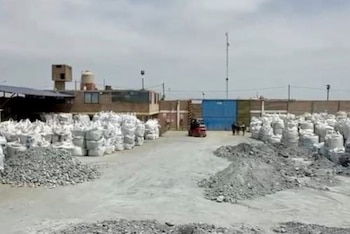
During the operation, the National Police achieved the arrest of 10 people involved in the illegal activity, who were made available to the Public Ministry. The detainees are under investigation for the alleged environmental crime in the illegal mining modality, within the framework of current legislation.
The operation included the participation of the Specialized Prosecutor in Environmental Matters (FEMA) , as well as experts from the Traffic Accident Research Unit, who were in charge of the technical validation of the seizures. The seized goods will be held in custody until the judicial authorities determine their final status.
The Public Ministry also ordered the elaboration of the corresponding protocols to prove the quantity and value of the immobilized goods, in addition to the identification of possible links with other commercialization networks of illegal minerals.
Philonian mining—activity focused on the extraction of mineral from veins or rock reefs—has its central axis in benefit plants. These plants convert the extracted mineral into a commercializable product. In the case of illegal mining, these plants operate without control , feeding a chain that extends from clandestine extraction to sales in unregulated markets.
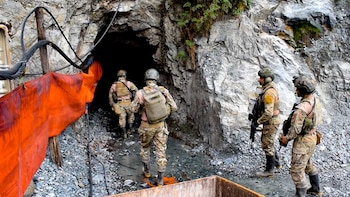
According to the authorities, this practice does not only generate serious environmental impacts , such as soil and water pollution due to the indiscriminate use of chemicals, but it also puts at risk the nearby communities . Explosive accidents, exposure to toxic materials, and labor informality are part of the direct consequences of this illegal activity.
In that sense, the seizure made in Trujillo aims to dismantle critical points of this illegal mining chain and halt the flow of processed minerals that end in the market without adhering to legality or safety standards.
The “Cruz de Motupe 2025” operation was supported by the National Directorate of Special Operations (Dinoes) and involved several institutions, including the General Directorate of Mining Formalization of the Ministry of Energy and Mines, the National Superintendence of Customs and Tax Administration (SUNAT), and the Ombudsman’s Office.
The entities involved stated that this action reflects a joint effort of the State to combat illegal mining, considered one of the most harmful illegal activities due to its social, economic, and environmental consequences.