
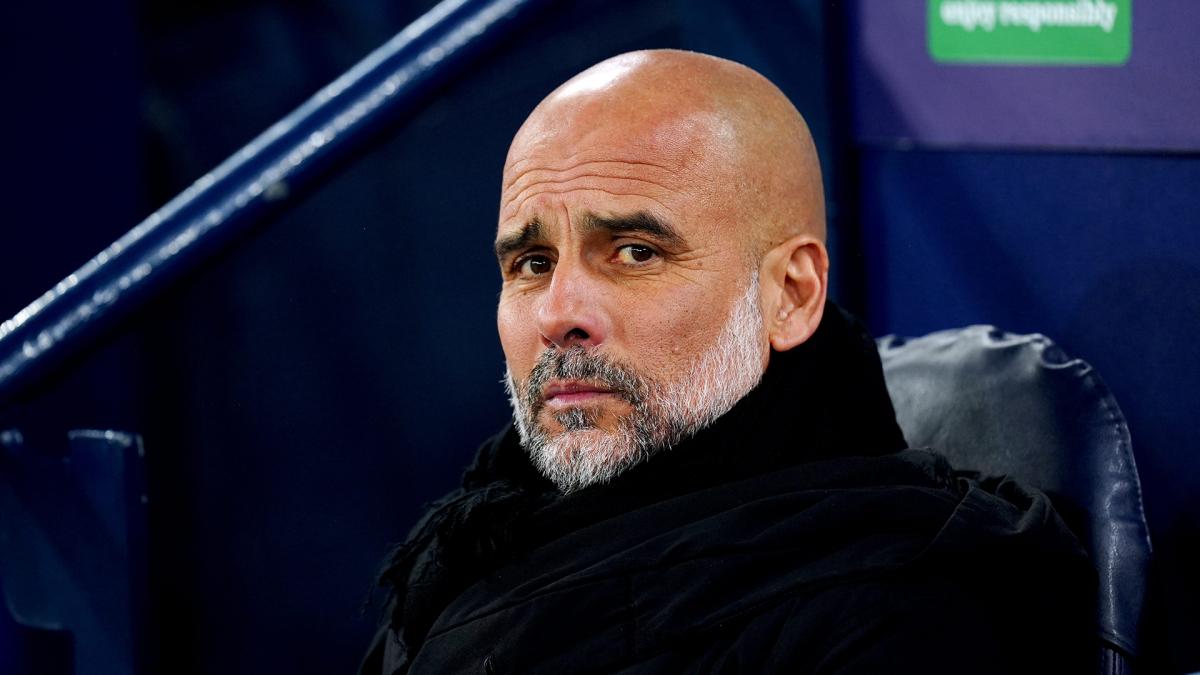
Pep Guardiola Discusses Rodri’s Rehabilitation and Team Dynamics
On a recent press conference, Manchester City manager Pep Guardiola addressed multiple topics concerning the team, including the rehabilitation of key player Rodri and the depth of the squad. Guardiola’s insights not only reflect on Rodri’s progress but also on the larger strategy involved in managing player health and performance across a demanding season.
Guardiola was asked about Rodri’s condition following his absence due to knee issues. “He trained well. He’s going well, everyone is fine,” Guardiola stated, indicating that the recovery process is on track. This affirmation came as a relief to fans and analysts alike, who regard Rodri as an irreplaceable asset in City’s setup.
However, complications arise when discussing the need for depth in the midfield. A journalist inquired whether Guardiola believed Rodri’s absence could truly be compensated for by relying solely on other players. Guardiola appeared irked by this question, countering with, “You say they (Monaco) marked against us because it was González who played and not Rodri? How do you know? How can you prove it?”
This response showcases Guardiola’s commitment to detail and fairness, emphasizing that a player’s impact cannot be measured in isolation. He elaborated further on the situation by highlighting the performance of González, who had been instrumental in recovering possession during the recent match against Burnley. “During the half hour he played, González was the player who recovered the most balls in transition,” Guardiola explained.
It is intriguing to note that Rodri’s absence was not reflected in a total lapse of defensive capabilities, as Guardiola pointed out that they did not concede any goals while maintaining a robust structure. Yet, he also acknowledged the reality that Rodri’s fitness levels require careful management moving forward. “Rodri cannot play 90 minutes in many matches,” he conceded.
The topic of player fatigue and injury management is not lost on Guardiola, as he referenced other players—like Carvajal from Real Madrid—who have suffered from repeated injuries due to inadequate recovery periods. “I have to protect my players,” Guardiola stressed, underscoring the crucial balance between fielding competitive teams and ensuring player longevity.
Despite the challenges of managing a player who has recently endured extensive rehabilitation, Guardiola expressed optimism regarding Rodri’s return to form. “I told Rodri that it is not a story of six or seven months. It’s not: ‘I come back, I play, and I become the Rodri from before.’ No!” he insisted. Guardiola believes that the “real Rodri” will not be visible until at least the 2026 World Cup with Spain and noted that the current season’s focus should be about progressing “step by step.” This sentiment reiterates his strategic approach toward player management.
Managing football players under high pressure comes with inherent complexities, and Guardiola’s philosophy prioritizes physical health as a cornerstone of performance sustainability. He acknowledges that Rodri has been “living on the care table” for a year, suggesting that the adjustments needed for recovery go beyond physical readiness—they include mental readiness and adapting to changed rhythms of play.
Guardiola’s comments also direct attention to the depth of the team, hinting that while Rodri is essential, the club has capable substitutes who can significantly impact matches. Providing the right opportunities for players like González can help stabilize the team’s performance while fostering growth among substitutes.
Rodri’s rehabilitation may be a meticulous journey, fraught with risks and uncertainties, yet Guardiola’s careful management indicates a well-thought-out strategy for navigating such challenges. As Manchester City continues on its trajectory for success, the insights from this press conference underscore the importance of proactive health management and the nuanced understanding required to lead a top-tier football club.
In summary, Guardiola’s perspective not only highlights the significance of Rodri but also emphasizes the broader tactics that underpin a successful football strategy. His medical conservativeness balanced with optimism paints a picture of a club that values its players and aspires to long-term success as much as immediate victory.