
In an increasingly digitized world, where artificial intelligence (AI) is transforming the way we work, investigate, and relate, supercomputing has established itself as the measure of technological power . It is a strategic resource that accelerates advances in science, innovation, and defense.
Not all supercomputers play in the same league. Frontier , developed by the United States Department of Energy, marked a milestone in 2022 by becoming the first to officially overcome the Exascale barrier , achieving 1,102 EXAFLOPS in the Benchmark HPL. Following this achievement, the Capitan and Aurora supercomputers were also launched in the U.S., solidifying America’s leadership in the field. In contrast, information regarding China’s supercomputing capacity remains largely opaque, with limited public data about their ongoing projects.
However, Europe is now making significant strides. The first supercomputer to achieve Exascale capability in Europe, Jupiter , is already underway. Installed at the Jülich Supercomputing Center in Germany, it represents one of the continent’s key advanced research facilities.
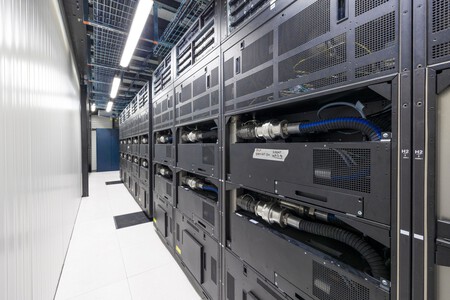
Jupiter is driven by the Nvidia Grace Hopper platform and features Evidan xh3000 Bullsequana architecture, using a liquid-cooling system designed to maximize efficiency and performance. It is projected to achieve up to 90 exaflops in artificial intelligence workloads. The applications for this powerful system will range from climatic research to neuroscience and quantum simulations, catapulting Europe into a new league of computational capability.
An Inauguration with Historical Significance
The official inauguration ceremony for Jupiter took place on September 5, with the presence of German authorities, European leaders, and technology industry experts. German Chancellor Friedrich Merz hailed it as a pioneering project for Europe .
“With Jupiter, Germany now has the fastest supercomputer in Europe and the fastest in the world. It opens entirely new possibilities, from AI model training to scientific simulations.”
In the Top500 list, Jupiter is already ranked fourth among the most powerful supercomputers globally, behind only Frontier, Capitan, and Aurora. Interestingly, the European Union is particularly proud that Jupiter runs entirely on renewable energy , utilizing green energy supply from the German grid. Its unique rack design, known as Jedi , leads the Green500 energy efficiency classification.
The Technical Marvel Behind Jupiter
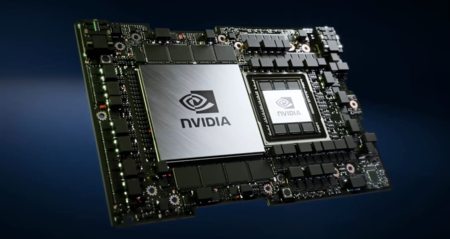
To grasp the scope of Jupiter, it’s essential to consider some of its remarkable technical specifications:
- 24,000 Nvidia GH200 Grace Hopper superchips
- 51,000 network connections utilizing Infiniband Quantum-2 technology
- A storage capacity nearing one exabyte
- Modular installation comprising 50 specialized containers
- Maximum power consumption of 17 MW, equivalent to approximately 11,000 households
- A rack known as Jedi, which leads the World Energy Efficiency Classification
Why Jupiter is a Game-Changer for Europe
Europe has lagged in the supercomputing race for years, historically overshadowed by the United States. Jupiter allows researchers, businesses, and academic centers direct access to a top-tier machine without reliance on external resources. This development is critical for nurturing talent, enhancing experience in managing such systems, and reinforcing technological sovereignty at a time when AI and computational power are strategic necessities.
Concrete Applications of Jupiter’s Power
The initial projects already selected showcase the potential of such a powerful supercomputer:
- Climate Research: The ECMWF conducts kilometer-scale simulations capable of representing extreme storms, which support the Destination Earth project aimed at digital twins of the planet.
- European Linguistics: The Trustllm consortium is focused on training language models across multiple European languages to cater to industrial and scientific needs.
- Neuroscience: The Arbor simulator will model neuronal behavior at the subcellular level, crucial for developing therapies for diseases like Alzheimer’s.
- Quantum Computing: Jupiter aims to exceed the record of 50 QBITS in simulation, marking an important step toward practical quantum computing.
- Astrophysics: The Max Planck Institute will utilize Jupiter to study cosmic reionization, the epoch when the first stars and galaxies formed.
- Particle Physics: The University of Wuppertal plans to enhance calculation resolution on particle collisions, potentially leading to new discoveries.
- Video Modeling: The University of Munich is exploring new compression and dissemination architectures that could benefit applications from healthcare to autonomous driving.
- Multimodal Models: The University of Lisbon aims to enhance open and multilingual models that integrate diverse scientific fields and automated learning.
Access and Future Prospects
Researchers can apply for access to the Jupiter system through calls held twice a year. Currently, there are already 30 projects in progress, and its expected lifespan is at least six years, promising both continuity and stability in a landscape where technological cycles are becoming increasingly rapid.
A Strategic Movement
Jupiter is not merely a technological achievement; it represents a strategic commitment for Europe to enhance its capabilities in a domain where the future of artificial intelligence is being shaped. With Jupiter operational, the continent gains a tool that enables it to compete at the highest level while ensuring energy efficiency and technological independence.
Images | Nvidia | Jülich Supercomputing Center
In Xataka | Alibaba has just demonstrated that OpenAI spends 78 million to do the same as them for $ 500,000