
NVIDIA Unveils Drive AGX Hyperion 10: A Revolutionary Step Towards Level 4 Autonomous Vehicles
NVIDIA has officially introduced its groundbreaking platform, the Drive AGX Hyperion 10, which promises to revolutionize the landscape of autonomous vehicles. This advanced computing and sensor system is tailored for any manufacturer aiming to develop Level 4 autonomous vehicles . Marking a significant partnership, Uber has already signed an agreement to incorporate 100,000 units into its fleet starting in 2027, with key automotive players like Stellantis, Lucid, and Mercedes-Benz also joining the venture.
Why is This Development Crucial?
The promise of autonomous driving has loomed large over the automotive industry for years, often entangled in marketing hype. However, NVIDIA’s Drive AGX Hyperion 10 translates that promise into a tangible industrial solution. With a framework comprising standardized architecture, certified chips , and comprehensive simulations out of the box, NVIDIA does not manufacture autonomous vehicles directly but offers the essential operating systems that can bring them to life. This shift from aspiration to reality is fundamental in the race for autonomy.
A Contrast in Business Models
For a decade, Tesla has positioned itself as the Apple of the automotive world , marketing autonomy as an ambitious yet abstract goal. With frequent software updates and a flexible fleet, Tesla aims to deliver “millions of autonomous Teslas” annually. In stark contrast, NVIDIA adopts an open platform model, allowing any automotive manufacturer to plug in their hardware solutions. This difference sets NVIDIA apart as analogous to Windows rather than a standalone product like Apple.
- Tesla: Aspires to be the Apple of Cars.
- NVIDIA: Envisions itself as the Windows of Automotive Technology.
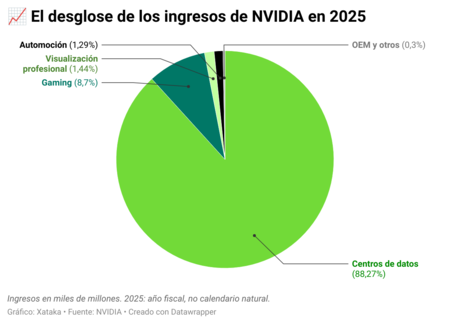
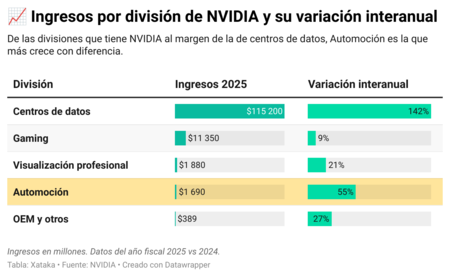
Between the Lines. Despite the automotive sector contributing only 1.3% to NVIDIA’s revenue, this segment is experiencing the fastest growth among its offerings. Nonetheless, Uber’s announcement regarding the deployment of 100,000 units lacks a concrete timetable , leaving many questions about when these vehicles will hit the road.
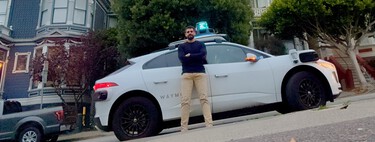
Competitor Waymo has poured years and considerable resources into developing its robotaxi fleet , yet currently operates only approximately 2,000 vehicles. This vast gap between ambition and reality underscores the complexities faced in delivering autonomous vehicle technology.
The Core Technology of Drive Hyperion 10
Drive Hyperion 10 is built on a powerful architecture incorporating two Thor chips , which deliver 2,000 teraflops each, alongside fourteen cameras, nine radars, one LiDAR , and twelve ultrasonic sensors . NVIDIA has meticulously designed this system with full redundancy ; in the event of a component failure, the vehicle can safely stop to avoid potential cascading failures.
In an exciting development, Lucid Motors is poised to be among the first to offer Level 4 autonomous driving services to individual consumers, not merely fleets. Their interim CEO recently acknowledged the company’s challenges in delivering effective driving assistance, implying that partnering with NVIDIA provides a safer path to achieving their autonomy goals than trying to develop it independently.
The Path to Revenue and Sustainability
Currently, NVIDIA is not focused on building robotaxis itself but rather sells the vital infrastructure components— chips, simulation software , and synthetic data —that support their platform. The approach allows the company to derive predictable revenue, differentiating itself from a model reliant on the actualization of full autonomy.
NVIDIA’s CEO Jensen Huang has stated that the moment for widespread autonomy is drawing near. The crucial factor now is that this timeline no longer hinges on blind optimism; it depends on regulatory approvals , certifications , and engineering tests . This shift transforms autonomy from being mere science fiction to an urgent engineering challenge , one requiring well-defined processes rather than scattered promises.
In sum, the introduction of NVIDIA’s Drive AGX Hyperion 10 represents a pivotal moment for the advancement of autonomous driving technology. It is a testament to how industry collaboration, cutting-edge technology, and strategic partnerships can lead to a more automated future for transportation.