
The Inauguration of Wonsan Kalma: North Korea’s New Beach Resort
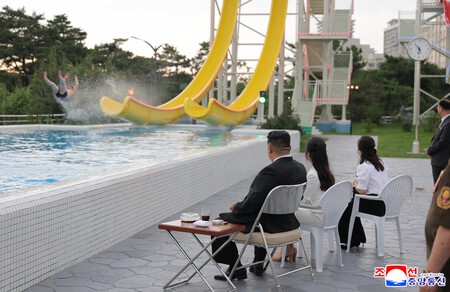
In a surprising turn of events, North Korean leader Kim Jong-un recently inaugurated a new beach resort, aptly named Wonsan Kalma , presenting an image starkly different from his usual appearances. Instead of being seen commanding missile launches or surrounded by his uniformed aides, Kim relaxed in a folding chair, sipping a soda and enjoying a pack of cigarettes while observing children slide down a giant water ride. This spectacle raises a pressing question: How does a nation marked by secrecy and control expect to attract foreign tourists to such a project?
Welcome to Wonsan Kalma
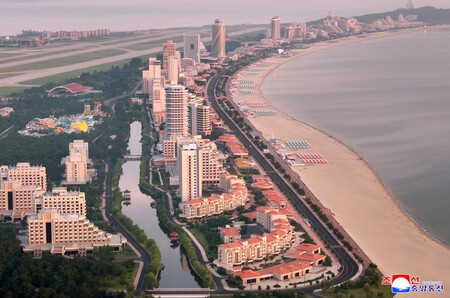
On the surface, Wonsan Kalma appears to be North Korea’s answer to Benidorm , the well-known Spanish coastal resort. The launch included all the fanfare one might expect from similar projects, complete with fireworks and a ceremonial cutting of the ribbon. This extensive Megacomplex is designed to accommodate 20,000 guests and features hotels, an aquatic park, and several kilometers of beachfront, all developed as part of Kim Jong-un’s vision to promote tourism in the hermetic nation.
The Shift in Kim’s Image
Traditionally, Kim Jong-un is seen in a gray or black Mao suit , presenting a sober demeanor during critical military inspections or diplomatic meetings. At Wonsan Kalma, however, he adopted a far more casual look, blending into the joyous atmosphere as if he were a K-Pop star enjoying a day at the beach. This image shift signifies a deliberate attempt to seem more approachable, perhaps aimed at bridging the gap with potential tourists.
A Family Affair
During the resort’s opening, Kim was notably joined by his wife, Ri Sol-Ju , and their daughter, Ju-Ae , who is often perceived as the potential heir to the Kim dynasty. Their presence adds a familial touch to the grand occasion, further humanizing Kim’s public image. As they walked along the resort’s beach, inspecting the facilities and enjoying leisure activities, the scene seemed almost at odds with the country’s historical reputation for repression.
Challenges Ahead
While the completion of Wonsan Kalma is newsworthy, it’s essential to recognize that the project has been in the making since 2013 , when Kim first expressed his desire to turn Wonsan into a tourist destination. Despite ambitious plans for development, the timeline encountered significant setbacks, including the COVID-19 pandemic and international sanctions , which have resulted in material shortages. Originally slated for completion in 2022 , the project faced multiple delays, pushing the opening to July 1, 2025 .
Who Will Fill the Hotels?
Tourism is a complex issue in North Korea, particularly given the nation’s stringent controls on foreign visitors. Although Wonsan Kalma boasts numerous amenities—beach access, pools, and various recreational facilities—the critical question remains: Who will come? The complex can accommodate tens of thousands, yet the government’s current tourism strategy focuses primarily on ‘national clients’ —a term that raises eyebrows regarding the potential visitor demographics. Notably, there was a Russian delegation present at the inauguration, signaling a potential shift in North Korea’s tourism focus.
The Road to Tourism Revival
In recent months, North Korea has shown tentative steps towards reopening its borders to foreign visitors, a sector crucial for generating foreign currency . Mid-2023 saw some relaxation in travel restrictions, initially welcoming Russian tourists and later opening briefly to a limited number of Western visitors. However, these efforts have been inconsistent, and plans to promote Wonsan Kalma internationally have yet to be clearly defined. As of now, the KCNA state agency has made no mention of targeting potential visitors from beyond its borders.
Looking to Russia
Reports indicate that Russian tourists may be the primary visitors to Wonsan Kalma, with local agencies creating travel packages priced around $1,800 . In a pre-pandemic context, North Korea had previously hosted approximately 300,000 foreign tourists , primarily from China, generating an estimated revenue of $90 million to $150 million . The question of how successfully North Korea can rekindle this tourism boom remains to be answered.
With this new initiative, analysts are watching closely to see whether Wonsan Kalma becomes a viable hub for foreign tourists, or if it transforms into yet another elaborate façade that obscures the stark realities of life in North Korea.