
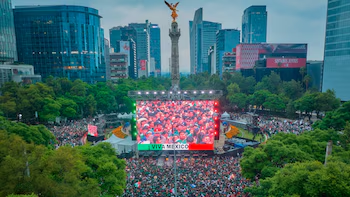
The Angel of Independence: A Celebration of Football Triumphs
The Angel of Independence, an iconic monument situated on Paseo de la Reforma in Mexico City, has become the prime gathering point for vibrant celebrations following victories of the Mexican national football team as well as local Liga MX clubs. This unique fusion of national pride and sporting euphoria has solidified the Angel’s status as a cultural landmark where emotions run high, especially during significant tournaments like the World Cup.
A History Rooted in Emotion
The tradition of celebrating at the Angel of Independence dates back over 50 years, originating in the wake of the 1970 World Cup—a turning point in Mexican football culture. Historian Carlos Calderón Cardoso notes that on June 7, 1970, after a resounding 4-0 victory against El Salvador, a group of ecstatic fans began to march towards the Angel, marking the beginning of this festive custom.
As the crowd swelled throughout the afternoon, spontaneous celebrations erupted. Attendees sang the national anthem, waved flags, and reveled in the shared joy of victory. Some accounts mention that an even larger celebration occurred after Mexico’s win against Belgium a few days later, leading fans to serenade national team member Gustavo “El Halcón” Peña outside the team’s hotel, ultimately moving the festivities to the Angel.
A Symbol of Unity
The Angel of Independence serves as more than just a meeting point; it embodies national unity. Every World Cup brings families, friends, and strangers together, where differences are overlooked in favor of collective joy. The sense of community forged around football triumphs creates a powerful bond, attracting thousands to celebrate the achievements of their beloved teams.
Challenges Amidst the Celebrations
However, not all celebrations are devoid of challenges. During recent festivities following a match against Ecuador, reports indicated that four individuals tragically lost their lives. Initial investigations revealed that three victims succumbed to suffocation, while the fourth had pre-existing health issues leading to a cardiorespiratory arrest. Such occurrences remind us of the delicate balance between joy and safety during large gatherings.
Expanding the Cultural Landscape
Over the decades, the custom of organizing football celebrations in picturesque locations has spread beyond Mexico City, influencing places like Guadalajara and Monterrey, where fans gather at The Minerva and the Macroplaza. Furthermore, this practice has transcended cultural boundaries, with foreign communities actively participating. A recent example includes Colombian fans celebrating into the early hours after their victory over Uzbekistan at the Angel, showcasing the monument’s emergence as a multicultural hub for sporting joy.
Conclusion: More Than Just a Monument
Initially a symbol of Mexican independence, the Angel has evolved into a monument of collective celebration and camaraderie. Its role in uniting sports fans reflects the capacity of football to transcend individual differences, offering a space for joyous expression that resonates with all who participate. As the Angel of Independence continues to host celebrations, it remains a testament to the power of sport in forging lasting connections within the fabric of Mexican society.