
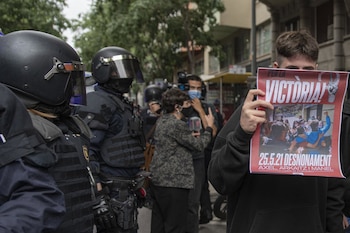
The Acquittal of Activists in Barcelona and Its Implications
On May 25, 2021, the Bloc Llavors community in the Poble Sec neighborhood of Barcelona became a focal point of protest against eviction practices, leading to a series of arrests and court proceedings following the police intervention. A recent ruling from the Criminal Court 22 of the Provincial Court of Barcelona has acquitted 19 of the 21 individuals prosecuted for their actions during this controversial event. The court decision has sparked varied reactions not only in political circles but also within activist groups, highlighting broader issues surrounding social justice and housing rights.
Background of the Eviction
The Bloc Llavors, a collective housing initiative, was home to six families since 2017. The eviction was not a spontaneous event—five prior attempts had been made before the police finally succeeded on that fateful day. The act of eviction was marked by significant tension, culminating in an increase in activist presence at the scene. Protests erupted as activists sought to prevent the eviction, viewing the police’s actions as a violation of human rights and community agreements.
Legal Proceedings and Verdict
According to the court records, the legal proceedings included six sessions held from May to June 2025. The Prosecutor’s Office had sought harsh penalties, requesting 20-month jail sentences and fines totaling €205,000. However, the final ruling acquitted the majority, indicating a significant gap between public sentiment and legal outcomes. The judge ultimately found insufficient evidence linking many of the protesters directly to any criminal actions during the incident.
Charges Against the Protesters
Of the 21 individuals facing charges, only two were found criminally responsible for serious resistance against authority, resulting in a six-month fine and subsidiary personal responsibility in case of default. The ruling noted that while there was certainly chaos and unrestrained behavior during the protests—including the formation of human barriers and the throwing of objects—there was no credible evidence to establish direct involvement from the accused in causing injuries or damage to police officers.
Injuries Reported During the Protest
During the protests, four police officers sustained injuries, primarily bruises to their hands, knees, and wrists. Fortunately, all officers returned to work without sequelae shortly thereafter. However, the incident raises significant questions about the methods used by law enforcement and the overarching narrative that surrounds police interventions in civil unrest.
Damage Assessment
Financial damage incurred during the altercation included losses estimated at €8,386 due to equipment damage and €7,284 related to telecommunications materials. These figures reveal the broader financial implications of such social movements, underscoring the tension between community struggles for housing and the costs related to police enforcement.
Reactions and Societal Impact
The court’s decision is poised to have far-reaching effects not merely within legal frameworks but also in the realm of public consciousness. Activist groups have taken this outcome as a victory for social justice, believing that it sheds light on the systemic issues perpetuating housing insecurity. Conversely, governmental and law enforcement bodies are likely to interpret the ruling as a warning: the implications of police presence during civil action must be balanced with respect for civic rights.
A unifying thread among all stakeholders—from activists to policymakers—is the pressing need to address the growing housing crisis in urban areas like Barcelona. As more communities face the threat of evictions, the discourse surrounding social justice, community rights, and police actions continues to evolve.
The events at Bloc Llavors serve as a microcosm of a broader challenge—how societies navigate the intersection of law, order, and social equity. As activists continue to fight for the vulnerable, the balance between enforcement and empathy remains delicately poised in cities across the globe.
In conclusion, the outcome of this high-profile case and the changes it could inspire reflect not only a pivotal moment in the discourse around evictions but also a potential shift in how communities address the housing crisis, engaging in a deeper dialogue about the nature of resistance and the rights of individuals to live securely and with dignity.