
Apple has just revealed its cards to fight for the best mobile of 2025 and early 2026: the iPhone 17 Pro and the iPhone 17 Pro Max . In the traditional ‘Keynote’ from the Apple Park, the company has presented these new models that arrive next to the iPhone 17 and the very rumored iPhone 17 Air .
Goodbye Crystal and Titanium, Hi Unibody of Aluminum. And that is good
Ahead, the new iPhone 17 Pro models are almost identical to the previous ones. On the sides, more of the same: they have not altered the tactile control of the camera introduced in all the models of the past generation, nor have they changed the position of the button on the left side, which allows customization with different actions.
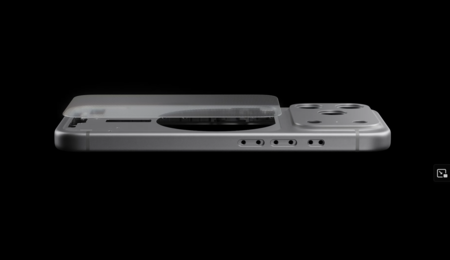
<span>The body is an aluminum unibody</span>In the rear and inside, the real changes become visible. The rumors were on point, as housing companies already leaked the design just hours before the announcement. Apart from the well-known triplet of cameras that we have been seeing since the iPhone 11 Pro, there is now a lidar sensor dislocated to the opposite side and, together with the flash, a more elongated module.
It appears as though they had taken the cameras module of the previous versions and stretched it. This is not merely an aesthetic adjustment; the materials have changed in response to a need: better heat dissipation.
The majority of the chassis is now formed from a single piece of aluminum, encompassing the sides, internal structure, and camera module. A farewell to glass and titanium of previous generations. Far from being a regression, aluminum is an excellent material for heat dissipation, proving to be more efficient than glass—a historical requirement for iPhones.
48 Megapixel Cameras. The Three
This year, Apple has once again dedicated a significant portion of the presentation to discuss the photographic capabilities of the new iPhones. Before diving into specific features and new processing methods, let’s cover the key specifications that showcase the upgrades.
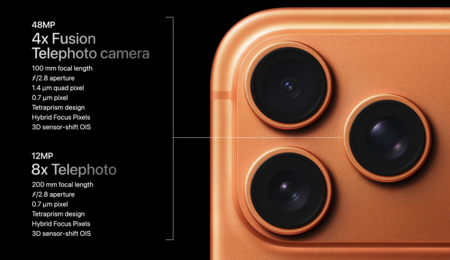
For the first time, all four cameras in the iPhone 17 Pro and Pro Max now boast 48 megapixels . This includes the primary camera, the ultrawide, and what is new—the telephoto lens.
</div>Fortunately, the megapixel war is no longer the main focus for many models. However, computer photography has shown us that enhanced megapixels can significantly improve photo quality—even using digital zoom.
Moreover, the iPhone 17 and 17 Pro Max have seen changes in their Telephoto settings. Transitioning from 5x to 4x optics, it also introduces a novel feature: due to the 48-megapixel Telephoto sensor, an 8x icon now appears on screen.
Apple describes this feature as “8x zoom with quality equated to that of an optical telephoto,” paralleling what occurred with the 2x, thus allowing a comprehensive range of options between 0.5x and that 8x hybrid zoom.

</div>In addition to the newfound photographic capabilities thanks to the telephoto lens, the sensors paired with the A19 Pro chip enable video capture in RAW ProRes format. This proprietary format is compatible with Final Cut Camera and Blackmagic Cam , allowing for substantial adjustments in color and exposure without sacrificing detail.
In development …
In Xataka | Mobile devices with superior cameras that we have analyzed in recent months