
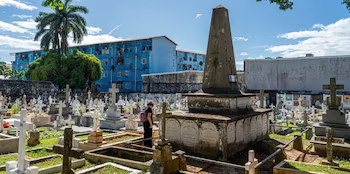
The Crisis of Cemeteries in Panama City
A Troubling State of Affairs
The cemeteries of Panama City present a haunting image: dirty, discolored, and overrun with weeds. These neglected graveyards are not only repositories of the deceased but also havens for vandalism and desecration. Abandoned structures and a lack of institutional management exacerbate the situation, facilitating illegal activities and making these sites dangerous.
The Decline of Municipal Cemeteries
Panama City houses eight municipal cemeteries, which have unfortunately fallen into disrepair. A study conducted by the Institute of Criminology at the University of Panama asserts that these cemeteries are viewed as dangerous and valueless, leading to further decay. The perception of danger fuels neglect, creating a vicious cycle of deterioration that locals feel powerless to stop.
Vandalism and Criminal Activities
The alarming theft of materials—such as tombstones, crosses, and religious artifacts—has been documented. Furthermore, reports indicate the misuse of bone remains in ritualistic practices associated with Santeria. The absence of institutional oversight allows these acts to flourish, which contributes to a grim necro culture that glorifies death and suffering rather than honoring life.
Cultural and Social Implications
Research by José Prieto Núñez emphasizes that cemeteries in Panama serve as more than just final resting places; they embody complex social dynamics that intertwine cultural, symbolic, and criminal elements. With over 630 cemeteries across the country either collapsed or saturated, urgent action and public policy reforms are needed to address these dire conditions.
The Need for Management Coordination
Núñez’s thesis highlights a glaring lack of coordination between institutions responsible for cemetery management and the community. Effective public policies are sorely needed to ensure the protection and preservation of these valuable cultural sites. Without such measures, the situation will inevitably worsen.
The Life Stories Behind the Graves
While many cemeteries in Panama are in crisis, they also tell rich stories of the nation’s history. For instance, the Wah On Kon Ce cemetery, established in 1882, holds significance for the Chinese community in Panama. Others, like the Israelite Charitable Cemetery, evoke the diverse cultural fabric of the country.
A Glimpse into Our Past
Archaeological sites like El Caño Park unveil tombs dating back to 750 AD, shedding light on the lives of early Panamanian ancestors. The artifacts discovered, such as gold beads and pectorals, indicate that these sites were once vibrant with social and spiritual significance, deserving respect and care.
Honoring the Departed
Commemoration is a cultural staple in Panama, with November 2nd identified as the day when families honor their deceased by cleaning graves and leaving flowers. Outside this date, neglect clouds the stillness of these resting places, raising a poignant question: why do we allow our dead to be forgotten?
Conclusion
The cemeteries of Panama City reflect a troubling neglect that speaks volumes about how society values its history and culture. Urgent solutions are needed to reclaim these spaces, ensuring that they are treated with the dignity and respect that the memories they hold truly deserve. As poet Gustavo Adolfo Bécquer aptly stated, “My God, that the dead are left alone!” We must not let this be the final chapter in Panama’s history.