
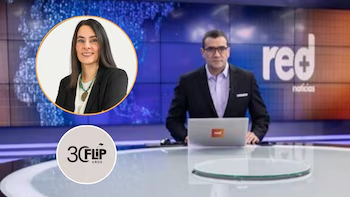
The Giovanni Celis Controversy: A Call for Change in Colombian Media
Triggering Events and Immediate Response
The recent suspension of Giovanni Celis, the director of Red+ Noticias, has raised alarms regarding workplace and sexual harassment within the Colombian media landscape. This decision came swiftly one day after complaints surfaced, highlighting a culture of inappropriate conduct at Claro Colombia’s news channel. The Foundation for Freedom of the Press (FLIP), led by executive director Sofía Jaramillo, issued a powerful statement denouncing the conduct detailed in an investigation by Raya Magazine.
Celis is accused of making inappropriate comments about his subordinates’ appearances, sending unsolicited personal messages, and engaging in non-consensual physical contacts, including instances of kissing. The investigation reveals a troubling environment rife with harassment and humiliation, compounded by an alarming lack of respect for journalistic integrity.
Pattern of Gender Violence in Newsrooms
Sofía Jaramillo emphasized that this incident is not an isolated case but rather indicative of broader issues of gender violence permeating newsrooms across Colombia. “It is worrying to see that these attacks already form a pattern in the different newsrooms of Colombia,” she stated, urging a collective recognition of the threats against female journalists.
The testimonies reveal a grim reality where women face disqualifications based on gender, sexist comments, and intimidation within their workplaces. These hostile environments not only impede personal development but also compromise the quality of journalism as these women are often silenced or discouraged from continuing their careers.
The Broader Impact on Press Freedom
FLIP reiterates that violence against journalists—especially women—significantly undermines press freedom and the public’s right to be informed. “Every attack against women journalists not only affects the victims but represents a direct affront to press freedom,” Jaramillo remarked. Such incidents foster a culture of silence that dilutes the diversity of voices critical to comprehensive media representation.
During a recent observance of International Press Freedom Day, FLIP highlighted the severity of gender violence as a form of censorship that detracts from journalistic integrity. Female journalists often confront unique risks and obstacles that hinder their professional growth and safety.
Call for Accountability and Change
In light of these distressing developments, FLIP has urged media organizations to address and mitigate harassment proactively. They called for transparency within newsrooms and emphasized the responsibility of management to ensure safe, inclusive working environments.
The urgent need for systemic change is reflected in the formation of movements such as ‘Me Too Colombia.’ This initiative has already compiled over 260 complaints related to sexual and workplace harassment in Colombian media, showcasing the magnitude of the problem and the critical need for reform.
Conclusion: A Collective Responsibility
The case of Giovanni Celis is a moment for reflection and action, prompting the media industry in Colombia to confront its shortcomings. As FLIP continues to document and publicly denounce acts of violence, it emphasizes that the fight for safety and respect in journalism is far from over. The need for transformative change within newsrooms has never been more pressing, underscoring the collective responsibility to foster a culture of safety and accountability for all journalists.