
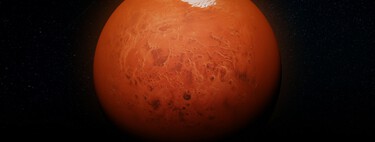
What Curiosity Found
Since its launch in 2011, NASA’s Curiosity rover has been and continues to be a trailblazer in Mars exploration. As part of its mission, it has been investigating Gale Crater—an ancient lakebed—to uncover the planet’s secrets. In March 2025, Curiosity’s onboard laboratory made a notable discovery when it detected the presence of decan, undecan, and dodecan—long-chain hydrocarbons known as alkanes. These intriguing find raises questions about the chemical makeup of Mars and its potential to harbor life.
Why Is It Important?
This discovery is particularly significant because these hydrocarbons are the largest organic compounds ever identified on Mars. On Earth, similar compounds are often derived from the biological degradation of fatty acids—a clear indicator of life. However, on Mars, the origin of these compounds remains ambiguous. While a biological foundation cannot be ruled out, the current evidence does not confirm it, leaving the scientific community in a quandary.
Biology or Geology?
The presence of hydrocarbons on Mars does not inherently signify life; there is a possibility that these molecules could originate from geological processes. On Earth, similar compounds can arise without biological involvement, thus complicating the narrative. In summary, the detection of organic molecules alone does not equate to confirming life; causation cannot be assumed from correlation.
A “Reasonable” Hypothesis
To seek clarity on the origins of these organic molecules, scientists examined known non-biological processes that might account for their abundance. A recent study published in Astrobiology suggests a “reasonable” hypothesis that living organisms could have contributed to their formation. This is based on the idea that none of the known abiotic sources could fully explain the observed quantities of hydrocarbons.
Potential sources discussed include organic molecules from meteorites striking Mars, cosmic dust, and specific geological chemistry processes, such as Fischer-Tropsch synthesis, all of which could create or contribute to the organic compounds detected on the Martian surface.
The Method
The conclusions drawn from these findings stem from a multidisciplinary approach. The research team combined laboratory experiments, mathematical modeling, and rover data to estimate the historical abundance of organic matter, even reaching back up to 80 million years. Their findings suggest that the levels of organic compounds present far surpass what non-biological processes would yield. However, they do not assert that life existed on Mars; rather, they emphasize that more research is essential to determine the potential presence or absence of life.
In light of these revelations, the question remains: was there life on Mars? While the evidence is tantalizing, the scientific journey continues, urging the need for further exploration and investigation.
For more insights into Mars exploration and organic discoveries, check out NASA’s detailed findings here.