
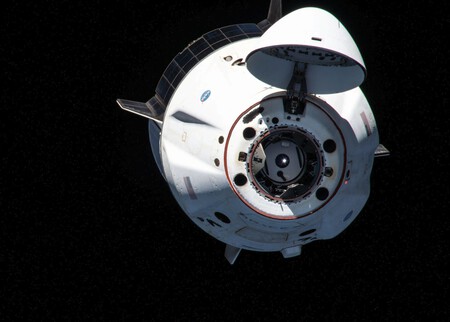
The 2024 NASA Incident: A Significant Setback
When NASA launched the Commercial Crew program, the intent was clear: to collaborate with private companies to design and operate their own spacecraft under fixed-price contracts. Boeing and SpaceX have played integral roles in this initiative, aimed at ensuring regular manned access to low Earth orbit. However, the Starliner manned test flight in June 2024 encountered significant anomalies that drastically altered initial plans. The classification of this test as a “Type A Incident” by NASA indicates that what occurred transcends a mere technical glitch.
A Closer Look at the June 2024 Flight
On June 5, 2024, NASA’s CST-100 Starliner lifted off for the International Space Station. The mission planned to last between eight and fourteen days, involving rigorous testing of the spacecraft’s systems. During the approach, helium leaks and thruster failures were detected, causing a temporary loss of maneuverability as the crew neared the station. Despite regaining control before docking, the mission extended to an astonishing 93 days. Following a thorough review of flight data and ground tests, NASA decided the vehicle would return in September 2024 without its astronauts, who eventually returned to Earth in March 2025 aboard SpaceX’s Crew-9 mission.
Analyzing the Independent Investigation Report
An independent investigation team was formed in February 2025 to assess the failures experienced during the test flight. Their analysis revealed a troubling mix of hardware failures, deficiencies in qualification processes, leadership errors, and cultural dysfunctions that collectively compromised safety standards within NASA’s manned flight program. NASA has accepted this report as conclusive, continuing to investigate the technical root causes.
Understanding the “Type A Incident” Classification
NASA categorizes a “Type A Incident” as the highest level of severity in its incident reporting system. This classification encompasses scenarios that involve damage exceeding $2 million, loss of control or destruction of a vehicle, or loss of life. Although no injuries occurred during the Starliner flight, the mission encountered considerable risks. NASA’s designation acknowledges the potential for a major mishap and emphasizes that the circumstances leading up to it cannot be dismissed lightly.
Cultural Insights from NASA Leadership
Nasa Administrator Jared Isaacman highlighted the cultural implications surrounding the incident. He stressed that unchecked decision-making and leadership could foster a culture incompatible with human spaceflight. The classification of this event as a “Type A mishap” aims to clarify and record the occurrence for future learning. Isaacman also acknowledged that initial self-investigation practices were “incompatible with NASA’s safety culture” and promised corrective actions.
Boeing’s Commitment to Improvements
In a statement following the release of the investigation report, Boeing reaffirmed its commitment to NASA’s vision of maintaining two commercial crew providers. The company expressed gratitude for the comprehensive investigation and emphasized that, in the 18 months since the test flight, it has made substantial progress on technical corrective actions and implemented cultural changes within its teams.
Conclusion
The 2024 Starliner incident serves as a critical reminder of the complexities and risks inherent in human spaceflight. As NASA and its partners work diligently to understand the root causes of this event, it highlights the importance of safety, accountability, and improvement in the evolving landscape of commercial space exploration.