
Understanding Microsoft’s Project Silica: A Leap in Data Preservation
Saving data “forever” is a tantalizing but intricate challenge. Regular storage media, such as CDs, DVDs, hard drives, or tapes, can become unreadable over time due to material degradation or support failure. Recognizing this gap, Microsoft has initiated projects like Project Silica to explore new methods of long-term data preservation.
What is Project Silica?
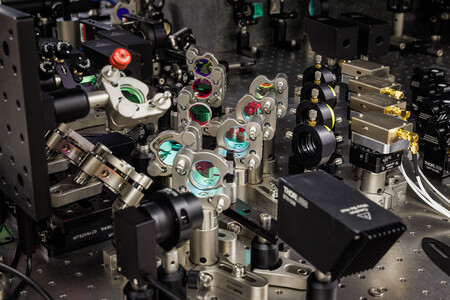
Project Silica seeks to redefine long-term data archiving. Moving away from conventional magnetic or optical technologies, it employs ultrafast lasers to manipulate the internal properties of glass, thus storing data in three-dimensional voxels. This innovative approach allows data to be read using optical techniques enhanced by machine learning, as detailed in a study published in the journal Nature. Unlike SSDs or hard drives, which prioritize speed, Project Silica focuses on creating a material specifically designed for enduring data conservation.
Historical Context
Microsoft’s exploration in this domain is not new; the company has been refining its technology for several years. A notable milestone was in 2019 when Microsoft successfully stored the entire ‘Superman’ movie in a glass fragment the size of a coaster. This experiment demonstrated that three-dimensional data storage is feasible and confirmed the durability of the medium against heat, water, and even demagnetization—a significant advancement in the field of data preservation.
Advancements in Material and Method
The key development highlighted in the 2026 announcement involves using borosilicate glass rather than high-purity fused silica. Borosilicate is cheaper and more readily available, making it more practical for widespread use. This shift effectively addresses previous marketing challenges associated with the technology, reducing the gap between scientific research and real-world application.
Streamlining Data Encoding
Recent updates also streamline the process of writing and reading data. The introduction of phase voxels, which can be created with a single pulse, enhances efficiency. Additionally, techniques for parallel writing allow multiple data points to be recorded simultaneously, significantly speeding up the process. A simplified reader now employs a single camera, aided by machine learning to improve classification and interference reduction.
Capacity and Longevity Potential
Technically, Project Silica can achieve data densities up to 1.59 gigabits per cubic millimeter. This translates to approximately 4.84 terabytes compressed into a glass chip measuring 12 square centimeters and just 2 millimeters thick. Such capacity can hold millions of printed books or thousands of 4K films, emphasizing the project’s focus on long-term preservation rather than immediate speed.
Durability: Potential Beyond 10,000 Years
Accelerated aging tests reveal that data could remain intact and readable for over 10,000 years under normal storage conditions. These projections rely on experimental models and not direct historical verification, but they suggest an unprecedented longevity far surpassing current electronic storage options.
Challenges and Future Directions
Despite its promise, Project Silica faces hurdles, including the reliance on expensive equipment and slower writing speeds compared to commercial solutions. The pathway to large-scale production, future compatibility, and establishing adoption models for institutions needing long-term data preservation remains vital for the project’s viability. Currently, Microsoft positions Project Silica as a shared research initiative, inviting collaboration with others in developing practical applications.
For anyone invested in the future of data preservation, Project Silica signifies an extraordinary leap and opens doors to a world where data can truly last forever.