
After the applause, whistles, and the clinking of vodka bottles with which the night had started, silence now extends through the control center of Yevpatoria like a cold blizzard. The Soviet engineers, standing scattered in front of the monitors, can almost feel their icy, wet touch on their skin. All eyes are focused on the same person: Vasili Mishin, the chief designer who arrived from Baikonur to supervise the launch of the Soyud spacecraft of the Zond 5 mission.
Sitting in front of the computers, Mishin does not take his penetrating eyes off the flashing lights on the panel. The Soyud, which shortly before had successfully taken off towards the Moon (with a Proton rocket) from the Baikonur Cosmodrome in Kazakhstan, is now facing serious problems. With each clearing of Mishin’s throat, the silence in the Yevpatoria room becomes denser. Although he had celebrated the takeoff in style, beneath his thick, tangled eyebrows, his pupils shine with a concentrated expression. History remembers him as “the loser in the race to the moon“, but on this night, Mishin skillfully navigates the ship 7K-L1 to resolve its first incident.
The engineers breathe a sigh of relief as Mishin’s brow relaxes. At the Yevpatoria control center, bottles of vodka are uncorked once more, and the celebration continues. It is September 14-15, 1968, and hundreds of meters above the heads of Mishin and the engineers, 7k-L1 is unstoppably heading towards the Moon. The journey of Zond 5 will go down in history as the first probe to orbit the satellite and return to Earth—an odyssey filled with challenges.
Zond and Its Peculiar Crew
Zond 5 becomes renowned not for the difficulties it encountered but for its intriguing crew. To investigate whether lunar trips posed any challenges for astronauts, the Soviets included a curious mix in the Zond 5 capsule: fruit flies, worms, plants, seeds, bacteria, and notably, two turtles, specifically two copies of Testudo horsfieldii. Additionally, the pilot’s seat housed a mannequin simulating a Soviet astronaut, complete with sensors to monitor radiation levels.
Described as a peculiar Noah’s Ark, the Zond 5 crew faced a journey worthy of a script from Hollywood. As detailed by Brian Harvey in Soviet and Russian Lunar Exploration, the turtles confronted significant challenges. Contamination hindered some equipment, while a poorly mounted Earth location sensor and obstructed stellar sensor optics further complicated the mission.
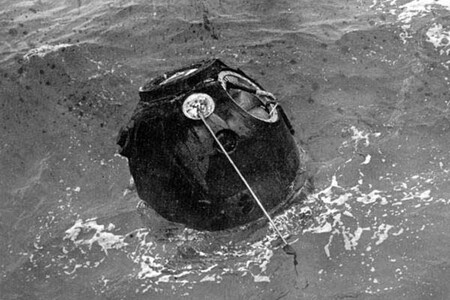
During their tumultuous return journey, the Chelonians experienced intense turbulence as the capsule descended violently, causing the outer shield to face extreme temperatures. The capsule ultimately landed in the Indian Ocean on September 21, around 7 PM, with parachutes deployed for a cushioned landing. The location beacons allowed the Borovichy ship recovered it the next morning.
Unexpected Consequences and Their Legacy
Upon inspection, technicians found the turtles had lost 10% of their body weight and were starved, having not eaten since their placement in the capsule. While their recovery was promising, the triumphant return did not spare them from fate; the scientists ultimately sacrificed them for autopsies to study the effects of the journey.
The Zond 5 mission captured excitement beyond Soviet borders, raising curiosity worldwide. Notably, at the Jodrell Bank Observatory in Manchester, Sir Bernard Lovell intercepted a human voice transmitting during the flight, stirring speculation that an astronaut was aboard. In truth, it was a pre-recorded message testing communication systems in space, featuring the voice of cosmonaut Valeri Bykovsky.
The legacy of the Zond missions extended beyond the turtles; the Zond 6 also housed biological payloads, although with a tragic fate as its capsule decompressed during reentry. The Zond 8 and later Soyuz missions featured chelonians again, demonstrating NASA’s and the USSR’s commitment to exploring the viability of life beyond Earth.
As we reflect on this pioneering era of space exploration, the tale of the turtles serves as a reminder of the sacrifices made in the name of science—a testament to the enduring spirit of discovery.