
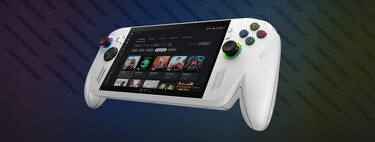
Microsoft’s Shift in Gaming Strategy
Microsoft has quietly withdrawn its “This is an Xbox” campaign, an initiative that sought to redefine the Xbox brand by asserting that any device, from televisions to mobile phones, could function as an Xbox. This unceremonious exit coincides with a change in leadership and a renewed focus on traditional console gaming, highlighted by the unveiling of Project Helix at GDC 2026.
The Campaign’s Objective
The “This is an Xbox” campaign was launched under Sarah Bond’s leadership, aiming to establish a manifesto for a post-hardware era in Microsoft Gaming. However, this approach has since faltered. The official blog entry introducing the campaign has resulted in a 404 error, and searching for related content now yields minimal results.
Initially, the reasoning behind the campaign seemed sound, focusing on expanding the Xbox ecosystem and promoting cloud streaming as an alternative to hardware dependency. Unfortunately, this strategy ultimately led to confusion among fans, who began questioning the necessity of purchasing a dedicated Xbox console when they could access titles across multiple platforms.
Internal Rejection and Strategic Changes
Ultimately, the campaign was not well-received within Microsoft. Plans for an Xbox mobile store announced in 2024 were shelved, and the arrival of Asha Sharma as the new CEO marked a significant pivot in strategy. With the exit of key figures such as Phil Spencer and Sarah Bond, the campaign was deemed a failure, encapsulated by Sharma’s succinct remark: “The plan is the plan until it isn’t.”
Project Helix: A Return to Form
On the same day that the “This is an Xbox” campaign was effectively buried, Microsoft unveiled Project Helix at GDC 2026. Led by Jason Ronald, the new generation of Xbox promises a hardware transformation powered by a custom AMD SoC. The company expects this move to provide “an order of magnitude leap” in gaming performance, incorporating advanced technologies like ray tracing and machine learning enhancements for next-gen gaming experiences.
Technical Insights and Future Compatibility
The technical specifications revealed for Project Helix include a custom chip based on RDNA 5 architecture, built with TSMC’s 3nm process. It also features a dedicated NPU geared toward optimizing advanced rendering capabilities. Developer alpha kits are scheduled to begin shipping in 2027, further indicating Microsoft’s commitment to maintaining compatibility with games spanning four Xbox generations.
Convergence of PC and Console Gaming
Despite these advancements, some issues persist. Microsoft has advised developers to “build for PC” as the future direction, blurring the lines between a traditional console and a gaming PC. As such, Project Helix may resemble Valve’s earlier Steam Machine initiative more closely than a conventional console. Additionally, Xbox Mode will soon be integrated into Windows 11, allowing users to enjoy the Xbox experience directly on their PCs.
Reflecting on Market Dynamics: The Sony Factor
Interestingly, both Microsoft and Sony have reached similar conclusions about their respective gaming strategies. Recently, it has been reported that Sony is pivoting back to exclusive titles to drive hardware sales, suggesting that their earlier strategy to broaden access to PC ports may not have yielded the expected results. The market is evolving, and both giants are now recognizing that a console must maintain its intrinsic value.
As both companies find common ground in their approaches, it’s clear that the gaming landscape is undergoing significant transformations. The narrative that “a console is a console” is back in vogue, suggesting that hardware will continue to play a vital role in the future of gaming.