
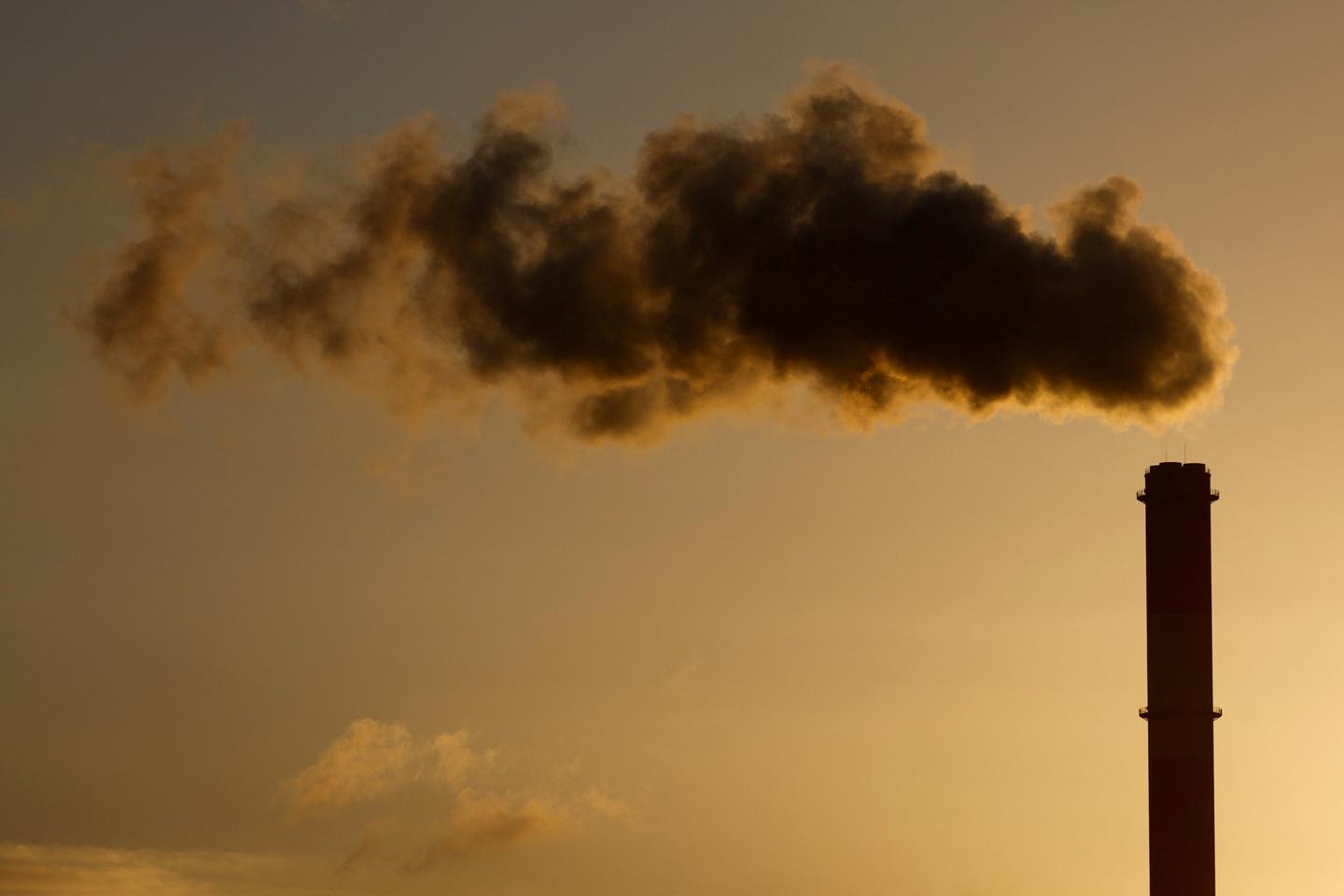
Methane emissions linked to the energy sector are maintained at historical levels. In a report published on Wednesday, the International Energy Agency (AIE) alerts on an increase in massive releases from petrogazières installations for this very powerful greenhouse gas. In 2024, the production of the fossil industry sector (gas, oil, coal) was thus responsible for rejection in the atmosphere of more than 120 million tonnes of methane, close to the record reached in 2019, according to the new edition of the AIE Global Methane Tracker report.
Invisible in the air and odorless, methane, second largest greenhouse gas after the CO₂, is the molecule of natural gas which escapes gas pipelines and coal mines, but whose emissions are also the work of cattle or waste. In total, around 580 million tonnes of methane are rejected each year, including 60 % attributable to human activity – with agriculture in mind, followed by energy -, and almost a third to natural wetlands.
The energy sector is responsible for around a third of anthropogenic methane emissions, due to leaks that occur at the time of extraction and production (Torchage, Methane release), and transport (gas pipelines, ships).
Methane, in power much more warming than CO₂, is responsible for around 30 % of global warming since the industrial revolution, but it has a shorter lifespan. It therefore constitutes a priority lever for a rapid reduction in emissions.
Methane control measures remain, however “Before ambitions”said Fatih Birol, executive director of the IAI. And this while around 70 % of these emissions could be easily avoided at a lower cost – the captured gas that can be sold, according to the OECD agency.
“A considerable impact”
China is the world’s largest transmitter of methane linked to energy, mainly from its coal sector. Then follow the United States and Russia. The IEA figures are based on measured data, when observations are possible, as opposed to declared emissions which can be obsolete or estimated from information from the energy sector. The AIE thus stresses that its estimate is around 80 % higher than the total declared by the countries to the United Nations. But “Transparency improves” thanks to more than 25 satellites which track the “Feathers” methane escaping from petrogazières installations, but also recycling centers, intensive farms, rice fields …
One of them, the European Sentinel 5P, which detects only the most important leaks, observed that the “Methane super-emission events” In petrogazières facilities reached a record level in 2024, despite reduced coverage. Massive leaks identified all over the world, but particularly in the United States, Turkmenistan and Russia.
Abandoned oil and gas wells, and coal mines, are also important sources of methane leaks, according to a new analysis of the AIE for the report. Together, they would constitute the “Fourth largest worldwide methane transmitter from fossil fuels”contributing for some 8 million tonnes in 2024.
Newsletter
“Human warmth”
How to deal with the climate challenge? Every week, our best articles on the subject
Register
Tackling these Energy Methane emissions would considerably slow global warming, thus avoiding an increase of approximately 0.1 ° C of global temperatures by 2050. “It would have a considerable impact, comparable to the elimination of a single blow of all CO₂ emissions of the heavy industry”indicates the report. The EMBER thinking group said Wednesday that the fossil industry should reduce its methane emissions by 75 % by 2030 if the world wants to put itself on the path of carbon neutrality in 2050.