
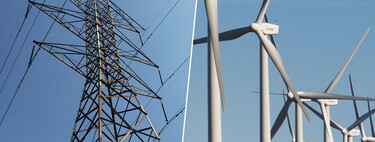
Representatives from eight Western venture capital firms have traveled to China and emerged with a stark realization: the West cannot compete in the burgeoning arena of new energy . This phrase might read like a sensational headline, but it reflects the genuine insights shared with Bloomberg by representatives from several companies just weeks ago. This observation isn’t particularly new either; for years, China has been solidifying its astonishing dominance across various clean energy sectors.
China’s success can be attributed to its industrial supremacy and considerably lower production costs compared to Western competitors , a gap glaringly visible in sectors such as electric car batteries , solar*, and wind energy .
Within the context of this unique Western ‘road trip’ to China, some participants expressed their concerns regarding how European and North American competitors could possibly survive in industries like batteries and components for renewable energy sources.
<img alt="Spain is producing so much renewable energy these days that a problem has arisen: it is throwing it away" width="375" height="142" src="https://i.blogs.es/165959/ps---plantilla-portadas-xtk/375_142.jpeg"/>The statistics tell a compelling story. China leads in manufacturing batteries , wind turbines , and solar panels while controlling critical components of the entire production chain . This also encompasses the essential materials needed for these technologies, a vital factor in the current energy landscape .
New Energy Mastery
Not long ago, China grappled with a formidable pollution crisis that severely impacted public health. In response, the nation implemented various measures to reduce pollution significantly, achieving its decarbonization goals ahead of schedule. Central to this success has been the widespread adoption of electric vehicles and cleaner energy sources that emit lower levels of CO₂ .
It’s not uncommon to see reports on China’s ambitious large-scale energy projects, such as the great solar wall , formidable wind turbines, and the construction of what will be the world’s largest dam , doubling as a colossal hydroelectric plant.
As China continues to invest heavily in renewable energy, the world has become increasingly dependent on its technological advancements . Europe and the United States find it challenging to compete with Chinese solar panels , leading to fierce local competition among Chinese manufacturers that has even necessitated agreements to refrain from selling at a loss.
In terms of solar energy output , projections indicate that China reached an impressive 887 GW of solar capacity in 2024, contributing around 270 GW of that total in just that year. This figure represents about 55% of all new solar installations worldwide last year. The numbers regarding other renewable sectors are equally staggering:
- China controls between 80% and 85% of global solar panel manufacturing capacity and over 95% of solar wafer production.
- In wind turbines, the nation holds a 60-70% share of global production, with nine of the fifteen largest manufacturers based in China.
- When it comes to electric vehicles , China commands 70% of global production, manufacturing 12 million out of the total 17 million EVs worldwide in 2024, with nearly all sold domestically.
- In alignment with the previous statistics, China is estimated to control 75% to 80% of lithium-ion battery production, essential for both new energy storage and electric vehicles.
<img alt="China has achieved what seemed impossible: powering the darkest and coldest place in the world with solar and wind energy" width="375" height="142" src="https://i.blogs.es/bfb0a5/4877e7632a83434c8a3952d182ebc40d/375_142.jpeg"/>Interestingly, the one area where competition between China and the West appears relatively balanced is in the hydrogen sector . Current estimates suggest that China dominates about 53% of hydrogen production compared to 30% for Europe and 12% for the United States.
Mastery of the Production Chain
This overwhelming dominance in production isn’t solely reflected in numbers; a crucial aspect contributing to the power of Chinese companies is their control over rare earth elements . These materials are paramount across various technological sectors, especially in the manufacturing of batteries and components for wind turbines.
For reference, China processes 80% of the world’s lithium and manufactures 90% of the anodes and electrolytes used in batteries. For years, Western nations have relegated this production to China due to environmental concerns, only to confront the harsh reality of China’s advantage in this field. The U.S. has recognized this imbalance, noting that imposing tariffs often led to China restricting rare earth exports.
Al Gore remarked that China’s dominance in the energy transition would compel many nations to forge closer ties with China, criticizing the U.S. shift towards fossil fuels as “a tragedy.”
<img alt="Lucy Guo, co-founder of Scale AI, bets everything on 996: "If you want to leave at 5, you're not in the right job."" width="375" height="142" src="https://i.blogs.es/b18df6/lucy-guo/375_142.jpeg"/>Adding to this production chain control is the “model 996” , a labor practice originating in the Chinese tech industry, particularly in firms like Huawei and Alibaba , which entails a grueling schedule of working from 9 AM to 9 PM, six days a week. While often labeled as modern slavery , the model was defended as necessary to keep pace with Western technological firms. However, the consequences for mental health have been severe, leading the Chinese Ministry of Human Resources to outlaw the practice in 2021 .
Despite the legal prohibition, reports indicate that several tech companies continue to adhere to these practices, adding another layer to the competitive difficulties faced by Western firms. The only exception might be companies in Silicon Valley that can sustain such rigorous demands.
China’s unwavering pursuit of energy leadership and its strategic advantage pose formidable challenges for the West as it navigates its energy transition. The disparity in production capabilities and labor models emphasizes a crucial need for innovation and investment in sustainable practices in the West.