
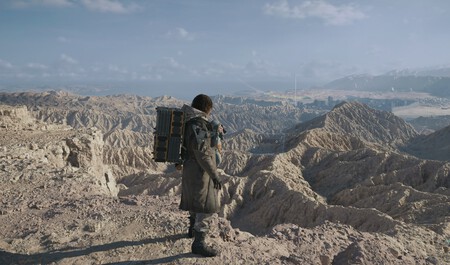
Six years have passed since the release of ‘Death Stranding’ , and almost a decade since one of the most important creators in the gaming industry, Hideo Kojima , was able to spread his wings freely beyond the walls of Konami and the legendary ‘Metal Gear’ saga. Kojima launched a video game that divided the community, earning jokes about its status as the most expensive ‘walking simulator’ in history, but it ultimately became one of those special offerings that emerge every so often in the industry.
Now the sequel arrives— ‘Death Stranding 2’ —which retains much of what we saw in the 2019 game. However, after just a few hours of gameplay, it starts throwing mechanics in your face that polish the formula and expand upon what was previously seen. It also broadens all those aspects that the first game may not have hooked many players, but with a twist: the protagonist, and thus us as players, comes equipped with lessons learned.
Importantly, while it continues as a ‘walking simulator,’ it also remains a unique experience in the medium, and I have to say it feels very much like a “video game.” Join me in this analysis of ‘Death Stranding 2’ , as there’s much to discuss about Kojima’s new work without delving into spoilers.
Kojima Returns
The first ‘Death Stranding’ was not an easy game to follow. Kojima enjoys many things, and one of them is intricate narrative storytelling interwoven with names and acronyms of objects and techniques that we better remember. Understanding what “BB,” “CWP,” “Q-Pid,” “EV,” or the new “APAS” means is essential for tracking the plot and the pacing of the video game.
Its story—though a lot more expository (something that remains in this second installment)—mixed philosophical, religious, moral, and technological elements in a brilliant way. If you connected with the story, you connected with the game. And precisely, connecting was the essence of both the first and second deliveries.
Time to walk
Following an event known as the “Death Stranding,” a cataclysm that changed the world, people sought refuge in underground ghettos, and messengers became essential tools for communication. We play as Sam , a messenger who, aside from delivering packages, connects these refuges as if he’s linking them to fiber optics.
As we connect them, we expand the resources and gear at our disposal, progressing through the narrative. That ‘Connecting people’ motto from Nokia is taken literally here, and after uniting the United States, it’s time to replicate this in a new territory: Australia . I mention the first game because the second follows a similar story arc.

Some quirky moments, and it’s fantastic
Eleven months have passed since the first game’s events when Sam comfortably lives with his BB, until suddenly, a messy situation between the government and private organizations drives us to hit the road again—literally and figuratively. We connect what remains of Mexico in the prologue and soon find ourselves on the oceanic continent.
I don’t want to reveal anything specific, as Kojima has played with us in the trailers, and I believe it’s best to approach this sequel knowing as little as possible. However, while the first ‘Death Stranding’ was eerily prophetic before COVID-19 , this sequel expands upon all of that, with nuances pointing to conflicts and situations we are currently facing, even more relevant now than when the first game was released in 2019.
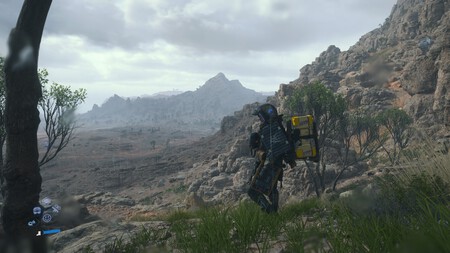
There’s an abundance of exposition, a codec we can consult anytime to ensure we don’t miss a detail, and hours of cutscenes where the cinematic language is overwhelming . One of the criticisms aimed at the Japanese creator is that he is a frustrated film director, but what Kojima excels at, even better than directing cutscenes, is creating video games.
Metal Gear Stranding
Because ‘Death Stranding’ , beyond its meme of being a Glovo delivery guy, revolved around a central mechanic: walking . It should be the most basic aspect of a video game, yet it’s astounding how often this is poorly executed. It’s said that Miyamoto, while developing ‘Super Mario 64’ , was not satisfied with the plumber’s movements until players could enjoy simply running and jumping in an empty stage.
This Mario movement was defining, and in ‘Death Stranding,’ feeling the weight of the gear on your back and the terrain’s accidents is the pivot upon which everything else revolves. Walking was a pleasure, running was too, and you had to keep an eye on the ground constantly to monitor stones and elevation changes while being careful not to lose balance under the weight of your load.
The progression was slow, and it might have taken too long to provide weapons to deal with some enemies that seemed necessary and vehicles that only appeared well into the adventure. In ‘Death Stranding 2,’ the base is still the same, but everything has been polished for improved quality of life.
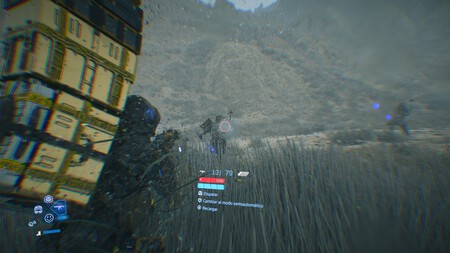
Shooting has improved, and thank goodness
The menu is identical to that of the first game, which is interesting since we won’t need to relearn how to read our gear status or load. We will also learn to use blood and grenades (although if you haven’t played the first, it is explained thoroughly). In the first mission, we already have access to substantial weaponry to deal with enemies, and before the four-hour mark, we can begin to create vehicles.
As I mentioned, everything arrives much earlier; but what I like is that each mission we complete rewards us with new unlockables to make our lives easier (from delivery carts to a monorail) and—most importantly—experience points. This makes the experience more relatable to ‘Skyrim’ or similar games.
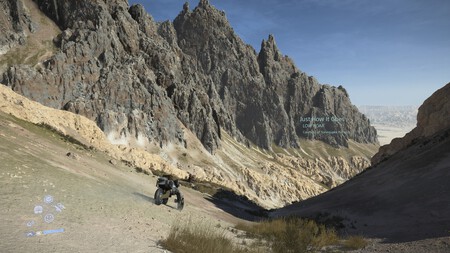
We have vehicles almost from the start
Did we use a lot of stealth during a mission? We gain more stealth points upon completing it. Did we go full Terminator? We receive more action points. This experience allows us to customize Sam more personally while also rewarding us with points to invest in a simple yet effective skill tree. Additionally, it’s not permanent: if we invest in upgrades that don’t convince us, we can remove them from that part of the tree and allocate them to different areas to make our tasks easier.
This allows us to approach the adventure more personally, inviting us to ‘role-play’ with our character. For example, I’m not a fan of stealth; therefore, equipped with guns, I clear enemies with my rifle. The combat is more agile than in the first game, and a brilliant addition allows us to remove our backpack at any time.

There are various missions involving clearing areas of enemies (both human and ‘spectral’), and doing so with 50-kilogram loads is difficult. We can create an umbrella against corrosive rain, leave the backpack there, and get into firefights. We can execute stealth techniques, and while improvements have been made compared to the first installment, where enemies scan for us more persistently, they can still be circumvented quickly, especially at higher difficulties.
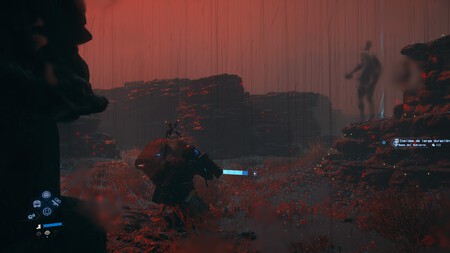
The moments against the EVs are very tense
If you wish to enjoy the story, you can do so in easy modes, where you’ll still experience significant physicality with the character and face challenges like the terrain. However, if you want a more challenging experience, although it’s not perfect, the enemy AI has improved compared to ‘DS’ . There are enemy bases, and reminiscent of ‘Metal Gear Solid V’ , we can scout enemies from a distance to have an advantage when diving into combat. The richness is evident, and you can feel the developers’ love put into this installment.
There’s also extensive customization for both Sam and the DHV Magellan ship , which acts as our new base. Every time we connect a main settlement, the ship remains at the doors of it, serving as the location for our room and weapons training center. This is a great addition as it allows you to feel that space is “yours,” a safe place to return to after a lengthy trek.
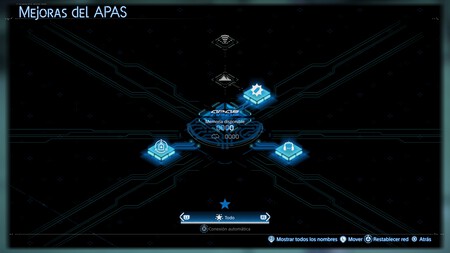
However, just like in the first game, I believe the real enemy here is the map. Mexico serves as a tutorial where we glimpse some distant advancements, such as landslides due to earthquakes; but Australia fights back strongly against us. It contains a myriad of biomes, with the steep terrains being the most challenging when carrying weight on our backs.
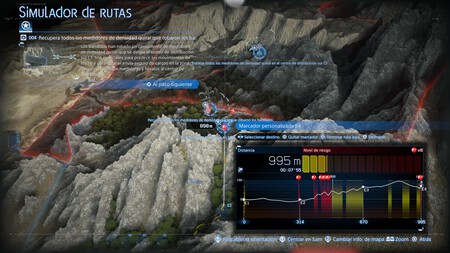
We need to take the time to plan our route
It’s easy to fall if we do not pay attention to the incline; torrential rains can cause rivers to rise, making crossings more challenging, and sandstorms can divert us off the intended course, not to mention earthquakes. From time to time, alerts for “earthquake here or there” pop up, and we think, “Okay,” but when an earthquake hits us, our cargo can be compromised.
They alter the environment we navigate through, and if we carry too much weight, we can be thrown off balance, damaging our load. This element adds tension and has impressed me more than others, like the day and night cycle affecting certain dynamics visually, but not much beyond that.
Essential Audiovisual Delight
In our texts, we usually don’t dissect the visual components of a video game, but in an analysis like that of ‘Death Stranding 2’ , I consider it necessary due to its immense weight in the experience. We are dealing with a game deeply connected to its physics technology but also to an aesthetic level, believing in what lies before us for two main reasons.
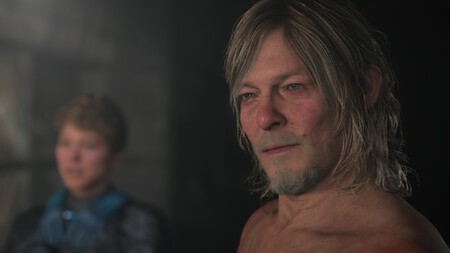
Nothing more to add
The first is due to the cast of main and guest actors being endless, offering familiar faces regularly. The likeness of Norman Reedus or Léa Seydoux has been modeled with astonishing detail, but other guests like Guillermo del Toro or George Miller (creator of ‘Mad Max’ ) are just as impressive. This is something my colleague Alejandro Pascual emphasizes in his analysis for 3DJuegos .
The game excels in its original version, but the Spanish voice acting, with returning actors and actresses, is also commendable. However, I recommend playing it in its original version, though this is up to each player’s discretion. The animations are superb, capturing small traits that deeply humanize characters—like subtle smiles, eyes moistening before crying, or even dirt on their faces.
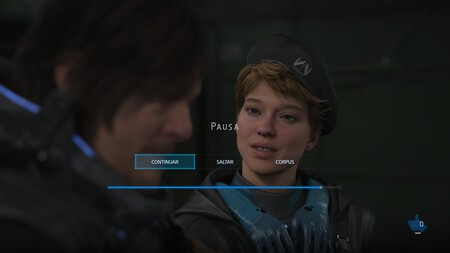
While there’s plenty of cinematic content, if you’re short on time during a session, you can see the progress bar to gauge how long is left
The fact that cutscenes are done using the game engine, with numerous nods to remind us we are in a video game (like characters referencing real-life elements, gamifying specific actions, breaking the fourth wall, or incorporating merchandise from Kojima Productions within the game universe) is fascinating. The environment that, as mentioned, serves as the primary protagonist, looks stunning.
Powered by the Decima engine (from Guerrilla Games , creators of ‘Horizon Forbidden West’ ), customized by Kojima Productions , it showcases a robust ability to present a wide variety of biomes . We encounter deserts, forests, mountains, and rugged terrains crafted with significant visual care. It’s true that the settings can be vast and empty aside from enemies, shelters, and fauna, but the draw distance is enormous, and the detail level is generous.
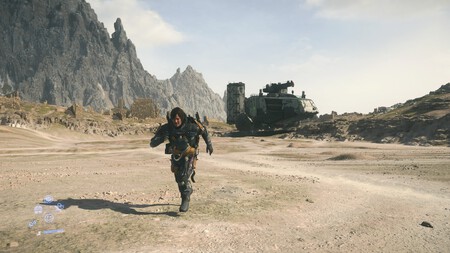
This game’s visuals are incredibly impressive
The sheer visual fidelity combined with excellent lighting and high-definition textures is crucial because, while there’s more action, the core mechanic remains walking and taking a contemplative stroll through many of these beautiful settings.
Such moments abound where the camera pulls back from Sam, music starts playing, and we continue moving toward our objective. It feels like the controls assist us somewhat to keep our path while paying more attention to the environment rather than Sam.
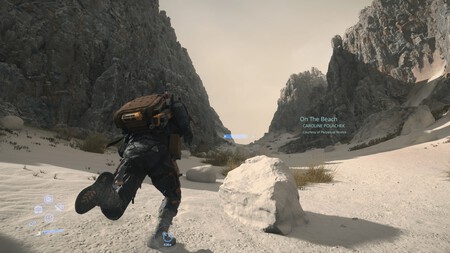
These moments are magical
These are crafted to let us enjoy the journey, and they are well-timed, often positioned just after sections of action, narrative moments, or tense encounters with ghostly enemies. I’ve played on a PS5 from launch, not the PS5 Pro, with modes available for both visual fidelity and performance. I’ve been playing in the fidelity mode.
A Striking Video Game in PlayStation’s Portfolio
In today’s PlayStation ecosystem, where controversies arise from the company’s pivot towards games as a service (GaaS), leading to cases like ‘Concord’ or the cancellation of ‘God of War’s GaaS , ‘Death Stranding 2’ stands out as a unique and necessary title.
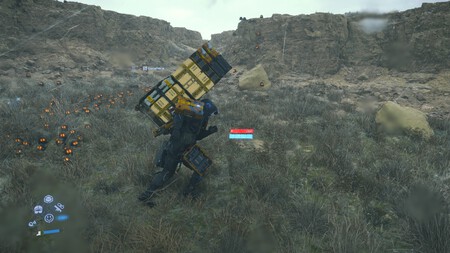
The creatures bite!
This is another grand single-player adventure with a strong asymmetric multiplayer component rewarding collaboration with other players that can be tackled at your own pace. After overcoming the initial challenges due to the abundance of character names, elements, and the universe’s complexity for newcomers, it rewards you with some of the best moments, almost introspective , that the medium has to offer. There are also some quite ridiculous moments here.
‘Death Stranding 2’ may be less inspired than the first but is equally personal—or perhaps more so. It’s Kojima refining what he created six years ago, and if you’re not fond of the Japanese creator (as he can indeed be excessive at times), certain moments might overwhelm you. Nonetheless, amidst the hustle and bustle of contemporary life, it’s a game I’ve greatly appreciated.
While not perfect, with enemy AI needing refinement, and the potential for fatigue if you’re not engaged in the endless cutscenes, mechanically, it is a very solid video game . The moments where I slipped into that flow state while walking through the map delivering primary and secondary packages are some of the best I’ve experienced with a controller in hand over the last few years.
Above all else, whether you like Kojima’s proposals or not, it is a game that must be appreciated for existing in an industry increasingly controlled by suit-wearing executives disconnected from gaming rather than the game developers themselves.