

On July 28, the Institute of the Kyiv School of Economy published a compelling study detailing the depletion of weapons stored in Russia’s vast Soviet-era arsenals, which have been utilized since the onset of its invasion of Ukraine. This analysis pointedly illustrated that Russia’s military stores have been facing critical shortages .
Subsequent research has bolstered these findings with graphic evidence . A recent intelligence analysis conducted by Ukrainian experts, utilizing satellite imagery, confirmed that Russian tank reserves are in a critical phase of exhaustion . According to another study, the consistent extraction of armored vehicles, paired with a declining industrial capacity to restore them at a sufficient pace, has put significant pressure on Moscow to sustain its efforts in Ukraine with modern combat vehicles.
In-depth monitoring of military deposits reveals that Russia is extracting about 20 T-72B tanks monthly from key storage facilities. If this trend continues, analysts predict these stores could be depleted by year’s end, a shocking prospect that highlights the unsustainable nature of its current military strategy.
According to satellite images, one particularly affected site is the 1311 deposit , where monthly withdrawals of T-72B tanks are taking place. Notably concerning is the report that the Uralvagonzavod plant , Russia’s main tank factory, is facing severe constraints due to a lack of supply. Additional data indicates that the 1311 facility no longer houses T-80BV tanks , suggesting total depletion of that stockpile.
With stocks dwindling, the presence of older models such as the T-55 and T-62 , dating back to the 1950s and 1960s, has surfaced from Omsktransash, a trend that emphasizes a regression to nearly obsolete models.
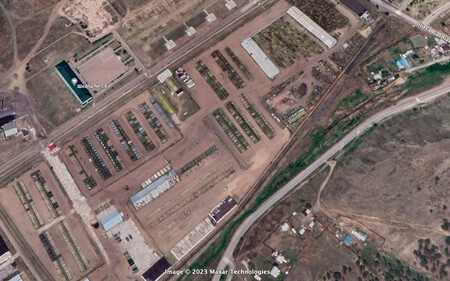
The industrial issues plaguing Russia further jeopardize its military capabilities. Reports indicate that Omsktransash struggles to maintain a reasonable pace of vehicle restoration. The necessity to utilize infantry combat vehicles, initially not part of the strategic reserves, showcases the improvised nature of Russia’s military responses amidst the void of effective armor.
Moreover, the acute lack of modern artillery is unmistakable. Earlier assessments revealed that nearly half of Russia’s towed artillery reserves have been consumed during the ongoing conflict, exacerbating the situation. The reactivation rate of artillery pieces has decayed to more than four times lower than recorded levels in 2022, confirming an inability to rebuild ground firepower .
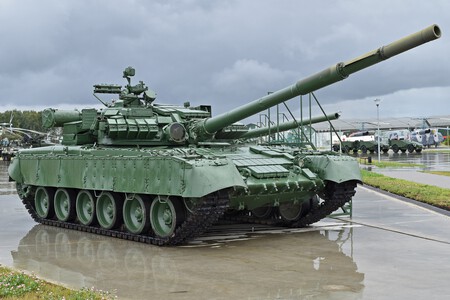
The absence of strategic reserves raises further concern. Should the 1311 deposit become completely depleted, Russia will have to turn to deposits 349 and 2544 , which house T-72A models . However, reports suggest that many of these tanks are in poor condition , limiting any effective military deployment.
Looking ahead, this trajectory is alarming: when these reserves run dry, Russia could rely predominantly on T-55 and T-62 tanks, which comprise a mere 16% of their armored inventory before the Ukraine invasion. The drop in quality from third-generation to outdated models could severely impact operational efficacy.
Furthermore, as noted in several reports, the decline in artillery compounds the situation. The deterioration of Russia’s military logistics has led to de-mechanization , shifting the focus from armored regiments to infantry-centric units utilizing makeshift transportation.
This situation doesn’t imply an immediate loss for Russia but does limit its ability to transform tactical advances into significant gains against Ukrainian forces, which continue to be resilient despite facing extensive assaults.

In conclusion, the complexities surrounding Russia’s military are indicative of a structural limit in their operational capacity. The initial abundance of Soviet-era reserves is rapidly dwindling, forcing the military to rely on outdated equipment that is ill-suited for contemporary warfare. Each deployment of older tanks not only compromises effectiveness but also increases risks for personnel in combat scenarios. The loss of modern armored assets will diminish the offensive capacity , demanding a reevaluation of assault strategies by Russian leadership.
Image | Google Maps, Jompy/X, Alan Wilson
In Xataka | The war in Ukraine is an evolving scenario, highlighting the resilience and resolve of both Ukraine and Russia as they navigate these tumultuous waters.