
| IN BRIEF |
|
Advancements in technology and neuroscience offer musicians unprecedented tools to push the limits of their capabilities . Among these innovations, an exoskeleton developed in Japan appears to revolutionize the practice of piano . Designed by scientists, this device aims to overcome the ceiling effect , a phenomenon well-known to musicians where the progression of skills seems to stagnate despite intensive training. The objective is to enhance speed and agility of the fingers, thus transforming artistic performance.
Understanding the Ceiling Effect in Musicians
For artists, particularly musicians, the ceiling effect represents a significant barrier. It is a phenomenon where learning stabilizes, preventing any notable improvement in performance. Despite countless hours of practice and intensive training, the brain stops learning significantly once this stage is reached. This stagnation can be discouraging as it reduces motivation to continue efforts.
Dr. Shinichi Furuya , a neuroscientist and pianist, has personally faced this effect. To address it, his team developed an exoskeleton specially designed for pianists at Sony Computer Science Laboratories in Tokyo. The idea is to enable high-level musicians to surpass this barrier and improve their artistic performances significantly.
The Role of the Exoskeleton in Enhancing Performance
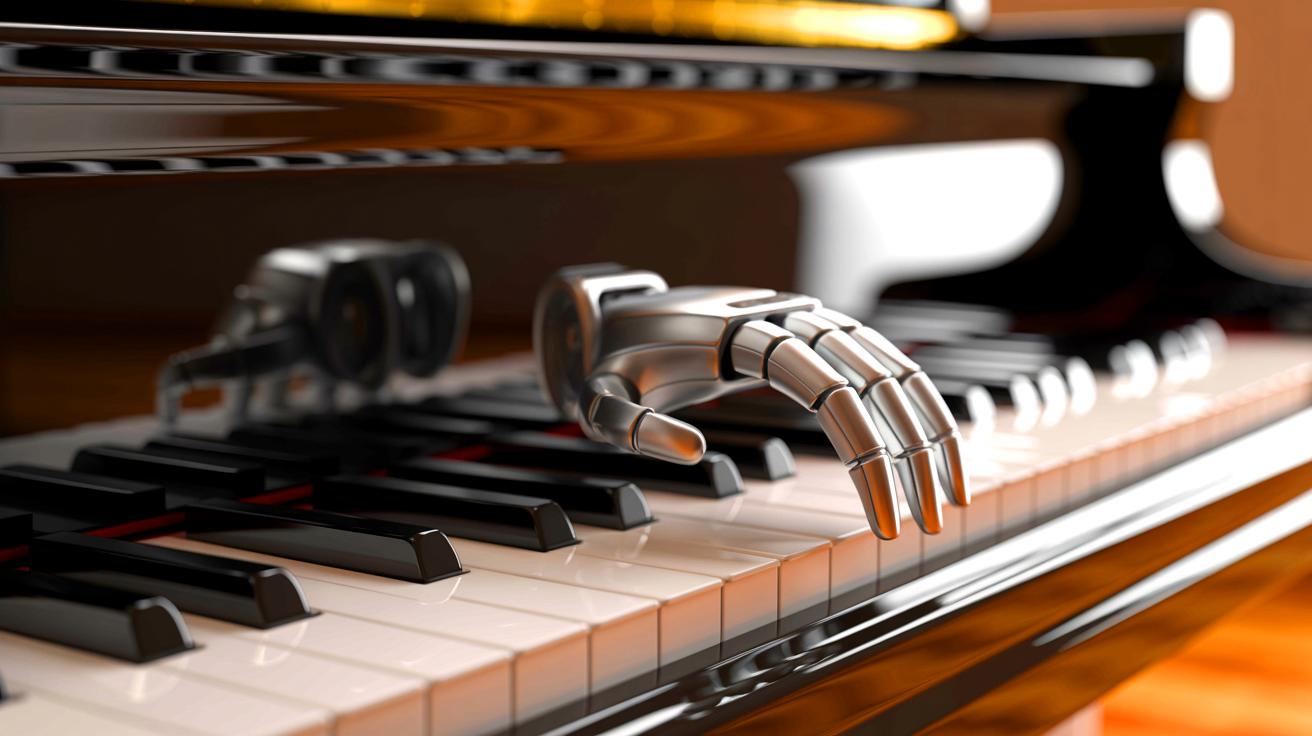
The exoskeleton , crafted from steel , functions as a substitute hand . It slips onto the right hand, utilizing the metacarpophalangeal joints to boost the speed and agility of the fingers without additional effort from the pianist. Tests conducted on a hundred high-level pianists demonstrated the ability to play at previously inaccessible speeds. This technology opens new horizons for musicians looking to expand the limits of their playing.
This device, much more than a simple tool, redefines what is artistically possible. Pianists can now envision bolder and more technically demanding performances, thanks to this technological assistant that accompanies them in their quest for excellence.
Surprising and Promising Results
After using the exoskeleton, researchers observed a significant improvement in the playing speed of pianists. What is particularly fascinating is that this increase in speed was also evident in the left hand, despite it not benefiting from the exoskeleton. This phenomenon can be explained by a transfer of know-how between both hands, orchestrated by the brain.
These promising results suggest potential applications far beyond piano, extending to other instruments and artistic disciplines. Scientists continue to explore these mechanisms to fully understand the implications of this groundbreaking technology in the musical field and beyond.
Impact on the Future of Music and Musicians
This Japanese innovation could profoundly transform the future of music. By breaking through the glass ceilings that musicians face, the exoskeleton provides the possibility to explore new artistic horizons. It challenges the perceived limits of human talent and paves the way for new forms of musical expression.
This technology redefines how musicians interact with their instruments, offering a bridge between innate talent and augmented abilities. As researchers continue to refine this invention, one question remains: how will this technological advancement influence creativity and personal expression among artists in the future?
This article has been enriched using artificial intelligence to include relevant insights.