
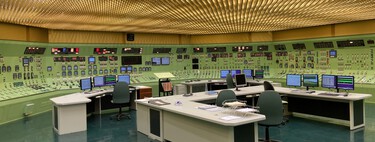
On April 28 at 12:33:30 PM, an energy zero disconnected the electrical systems of Spain and Portugal from the rest of Europe. This incident was not the result of a *cyberattack*, but rather a cascade of overvoltages and an inadequate control system, according to the Spanish government.
The Analysis Committee’s Report. Minister Sara Aagesen presented the findings of an analysis that reviewed more than 300 GB of data, 49 days after the blackout—a time frame half of what Brussels mandates. This detailed examination highlighted multiple failures that stressed the system beyond its limits, mainly pointing to Red Eléctrica, which is expected to release its own report shortly.
The full report concludes that there was no single cause, but a cascade of failures that led to a system overload. It particularly emphasizes Red Eléctrica’s role, which is set to respond on Wednesday with its own findings.
The Government Points to Red Eléctrica. The morning of the blackout, the system exhibited atypical volatility in voltages. This situation worsened between 12:00 and 12:30 PM when the grid experienced two significant fluctuations. The first, at 12:03 PM, was an anomalous 0.6 Hz event originating from within the peninsula.
The second fluctuation, occurring at 12:19 PM, was a more common 0.2 Hz oscillation at a magnitude three times greater than normal. In efforts to stabilize the system, Red Eléctrica reduced power exports and increased network interconnectivity, actions that ironically exacerbated the overall tension within the system.
A Domino Effect in 12 Seconds. Starting at 12:32 PM, as tensions rose further, a sequence of disconnections from large units of renewable generation triggered the disaster. The report identifies three key events that initiated the catastrophe.
At 12:32:57 PM, 355 MW were disconnected at a substation in Granada. Then, at 12:33:16 PM, around 730 MW dropped from a collection substation in Badajoz. Finally, at 12:33:17 PM, another 550 MW fell from a substation in Sevilla. Each disconnection contributed to an upward spike in system tension.
As voltage levels continued to rise, more generators disconnected as a protective measure, which in turn elevated tension further, creating a cycle of disconnections. Within just 12 seconds, the mass loss in generation caused a frequency drop that was a symptom, not the root cause. At 12:33:19 PM, the Iberian system lost synchronization with Europe and disconnected entirely.
Understanding the System Failure. The underlying issue was an “insufficient capacity for dynamic voltage control ,” which hindered the management of overvoltages, according to the committee. The report details that some of the initial disconnections in Granada, Badajoz, and Sevilla “occurred before they surpassed the voltage thresholds established by regulations,” marking a critical point in the collapse.
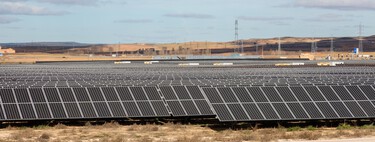
Another critical issue was that the major thermal plants, which were supposed to act as a buffer against rising tensions, did not perform adequately because the number of synchronous plants available was the lowest it had been all year. Moreover, some of the plants that were operational “did not respond appropriately.” Instead of absorbing reactive energy to lower network pressure, they produced more voltage, essentially worsening the situation.
In statements from the Ministry for Ecological Transition, it was noted that there was a lack of control resources, “but this did not stem from a national shortage; there was more than enough generating capacity available to respond.” Once again, the committee points the finger at the grid operator .
Proposed Measures Moving Forward. To prevent a recurrence of such an event, the report suggests enhancing oversight to ensure compliance with regulations, restructuring the legal framework governing evacuation infrastructures, quickly implementing a new service to allow renewables to participate in voltage control, investing in new synchronous compensators, and increasing interconnection with France.
Additionally, a cybersecurity investigation—reported to be “the largest in Spain’s history,” involving over 75 experts—concluded that there was no cyberattack. However, deficiencies were identified, prompting the committee to recommend expediting the implementation of European regulations, bolstering access controls and segmenting networks.
The Responsibility of Red Eléctrica. Following the government’s harsh critique, all eyes are on Red Eléctrica as it prepares to publish its report as the system’s operator, presenting its side of the story. In the meantime, the committee will share its findings with the National Commission on Markets and Competition to potentially initiate administrative procedures, ensuring all necessary legal guarantees are in place for accountability. The technical investigation has concluded, but the quest for responsibility has just begun.
Image | Victor Romero (CC BY-NC-SA 2.0)
In Xataka | A town in Granada with a population of 1,000 that boasts 700 MW of renewable energy: The place where the blackout started.