
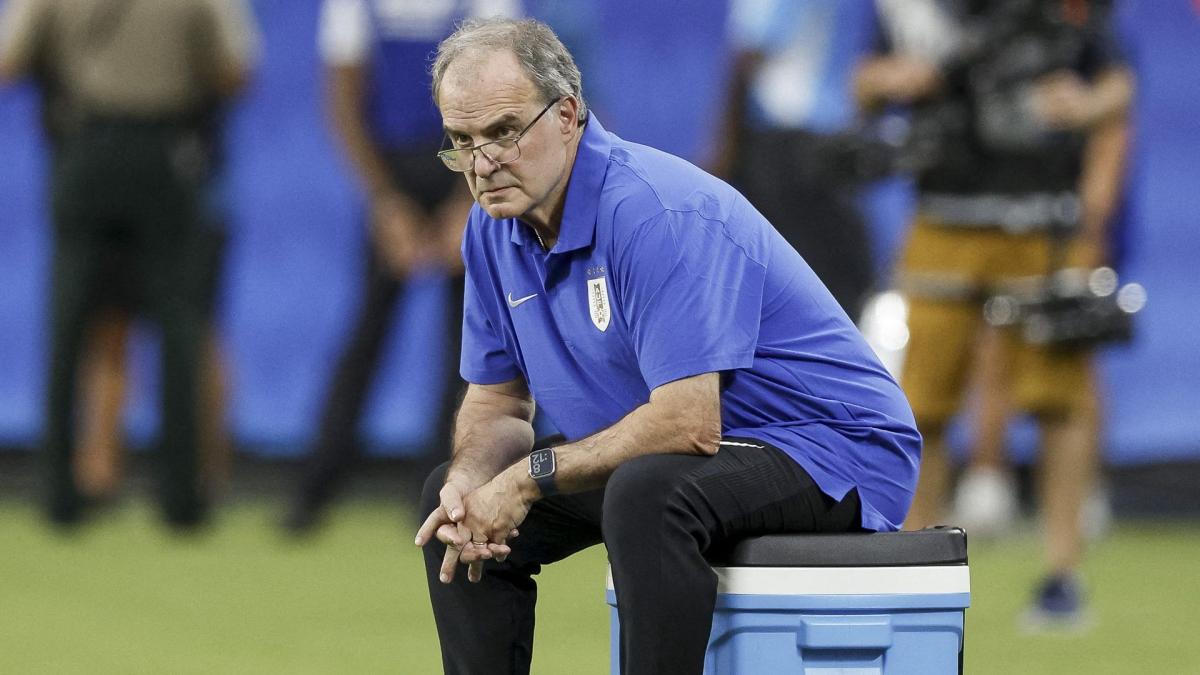
## Marcelo Bielsa’s Farewell and Insights
Marcelo Bielsa’s departure from the Uruguayan national team marked a significant moment in football history. After failing to guide Uruguay into the round of 16 in the 2026 World Cup, Bielsa expressed his disappointment and shared thought-provoking insights during his farewell press conference.
### Accepting Responsibility
“We disappointed the supporters,” Bielsa stated emphatically, highlighting his accountability for the team’s unexpected performance. He elaborated that explaining the failure is “unbearable,” as football evokes deep passion and emotions. Despite offering no excuses, he emphasized that he and his staff did their utmost within a supportive structure provided by the Uruguayan Football Federation and the fans.
### The Dynamics of Team Training
The crux of Bielsa’s reflections revolved around the evolving dynamics within the squad. He acknowledged being receptive to player requests, particularly regarding training methods. The players sought to train as a unified group instead of being split into two, which is a preferred technique of Bielsa for focused sessions. He agreed to this change, considering the wellbeing of his players, showcasing his willingness to adapt for the collective morale.
### Communication and Team Unity
Bielsa also addressed the need for more interaction, reducing the frequency of team talks. He believed in structured communication but accepted the players’ desire for fewer discussions, aiming for a more cohesive atmosphere. “It was not the relationship with the players that prevented us from obtaining the results we deserved,” he mentioned, emphasizing that they collectively faced challenges yet managed to maintain unity.
### Star Players Under Pressure
Bielsa’s discussion about his star players—Araújo, De Arrascaeta, Valverde, Darwin, and Giménez—was particularly revealing. He noted the complications arising from injuries and fitness levels leading up to crucial matches. He had to make tactical decisions based on the unique conditions of training, especially regarding playing decisions in high-pressure situations like the World Cup.
In his remarks on Fede Valverde, Bielsa reaffirmed the mutual trust they shared. Despite whispers of discord, he stated, “I never had a problem with Valverde.” Bielsa’s admiration for Valverde’s versatility as a player is evident, noting his capacity to neutralize top opponents in his club career.
### Conclusion: A Legacy of Learning
Marcelo Bielsa’s departure may signal a new phase for Uruguay, but his influence on the team’s philosophy and approach will linger. His commitment to transparency and willingness to adapt reflect a profound understanding of modern football dynamics.
The lessons learned from this experience serve as both a warning and an opportunity for future endeavors. As Bielsa moves on, the Uruguayan team must now navigate the complexities ahead, applying the insights gleaned from his tenure.