
Mercadona’s Impressive Margin Growth: A Closer Look
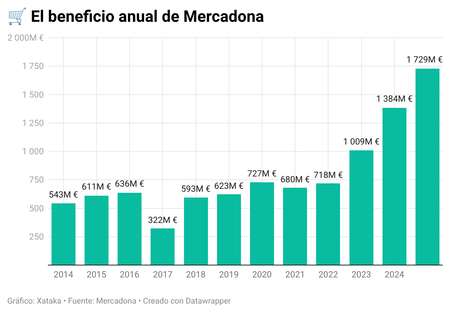
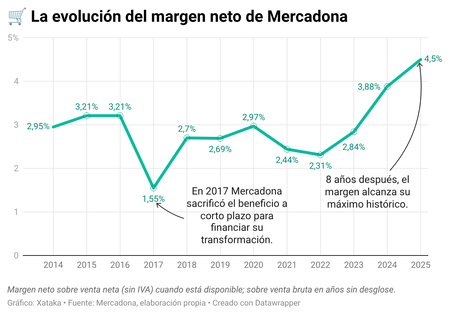
Juan Roig’s supermarket chain, Mercadona, achieved a remarkable milestone in 2025, reporting earnings of €1.729 billion—a 25% increase compared to 2024. This impressive performance was buoyed by total sales of €41.9 billion. For the first time, Mercadona’s net margin surpassed the significant 4% threshold, a feat that few in the European distribution sector manage to achieve.
Why This Matters
In the highly competitive food distribution industry, maintaining a high profit margin is often deemed nearly impossible. Supermarkets face relentless pressure on pricing while simultaneously grappling with the significant operational costs of managing vast stores and large workforces. Mercadona’s leap from a 3.88% to a 4.5% net margin, achieved without resorting to price wars or major discounts, exemplifies its unique and efficient business model that sets it apart from competitors.
Key Financial Highlights
- Net profit of €1.729 billion, up 25% from the previous year.
- Net margin of 4.5%, compared to 3.88% in 2024.
- €3.7 billion earmarked for store renovations from now until 2033.
- €780 million distributed among over 112,000 employees as bonuses.
- A total of 115,000 staff members, 5,000 more than last year.
- Notable improvements in productivity (4%), store order management (16%), and energy efficiency (4%).
- €172 million profit derived solely from treasury management.
The Competitive Landscape
Against a backdrop where rivals like Carrefour, Lidl, and Aldi typically operate with margins between 1% and 2%, Mercadona’s ability to exceed 4% is noteworthy, especially during a period of moderate inflation. This success is not merely about competitive pricing; it is deeply rooted in control over its supply chain.
Operational Efficiency
Mercadona maintains an ecosystem with 2,000 suppliers who invested €1.7 billion to enhance their capabilities in servicing the chain more efficiently. This strategic control translates to reduced costs and fixed pricing without relying on external brands that could leverage their position against Mercadona’s interests. The result is a leakage-free margin, where promotions that could dilute value and unnecessary intermediaries are absent.
Future Investments and Challenges
As Mercadona revels in its current success, the chain is also gearing up for an ambitious transformation with a planned investment of €3.7 billion to revamp its store portfolio until 2033. The scale of capital expenditure will escalate significantly over the coming decade, with intentions to invest over €1 billion in 2026 alone. Consequently, the company’s margin above 4% may represent a peak before entering a reinvestment phase.
E-commerce: A Double-Edged Sword
The e-commerce landscape poses challenges as it typically reduces profit margins. Other giants like Amazon and Carrefour have struggled to make online grocery shopping profitable. However, Mercadona reports that its online sales of €1.061 billion have been profitable for the past three years. If sustained, this success could provide a significant growth avenue, but failure to manage profitability in digital spaces risks eroding the hard-earned gains from its traditional operations.
Conclusion
Mercadona’s ability to achieve and maintain a net margin of 4.5% reflects a blend of operational excellence, strategic supplier relationships, and focused investments. As the company embarks on a transformative journey, balancing growth with profitability will be essential to sustaining its competitive edge in the evolving landscape of food distribution.