
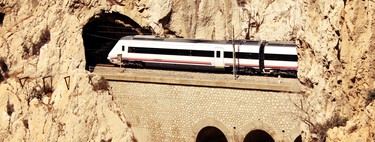
The high-speed train service in Spain has encountered significant challenges this past summer. To illustrate the situation, a staggering 40% of Renfe trains experienced delays. Issues ranged from breakdowns and missing trains to complications caused by wildfires across the country.
Beyond the summer woes, it’s evident that the Spanish rail network is beginning to show signs of fatigue. In June alone, the AVE (Alta Velocidad Española) trains arrived with an average delay of 19 minutes , following a nearly 21-minute average in April. According to a report published by Renfe, of the 9,607 trains that ran in June, only one in three arrived on time or with a delay of less than five minutes. These breakdowns have not only affected Renfe but also impacted the services of Iryo and Ouigo , which operate on the same tracks.
The data indicates two primary concerns. Firstly, Spain’s existing infrastructure seems inadequate to handle the influx of new operators (such as Ouigo and Iryo) and an increasing number of trips. Secondly, insufficient investment has been funneled into maintaining and modernizing the railroads. It’s highly likely that the current situation is a result of both reasons.
This raises a pressing question: how does Japan manage to operate six different train companies seamlessly, while Spain grapples with just three?
96 Seconds: A Look at Japan’s Efficiency
Traveling across Japan , especially on its main island Honshu , is a straightforward affair thanks to its high-speed train network. The frequency of services is remarkably high, and delays are exceptionally rare, leading to an impressive record of reliability.
While the Japan Rail system may initially seem confusing for first-time visitors, largely due to its operation by six different companies, each has designated routes to avoid competing on the same tracks like their Spanish counterparts. This organization enhances their efficiency and reliability.
In fact, four of these six companies (JR East, JR Central, JR West, and JR Kyushu) operate fully privatized services, while only JR Hokkaido and JR Shikoku remain state-owned. This structural organization underpins the reliability that the Japanese rail system enjoys.

In Spain, alignment with European regulations mandates that railway management is handled exclusively by Adif (which was public but later required privatization), charging fees to other companies wishing to operate on their tracks. Furthermore, the tracks are shared between both medium-distance and high-speed trains.
In contrast, Japan’s train companies maintain their own infrastructures and manage the maintenance of the tracks they operate on. A key advantage is that the Shinkansen , Japan’s famous bullet trains, travel on entirely separate infrastructure dedicated solely to high-speed travel, overseen by the Railway Construction, Transportation and Technology Agency of Japan (JRTT) .
This physical separation mitigates potential disruptions—if a problem occurs with a slower train, it doesn’t affect the Shinkansen . In addition, Japan has developed a system known as Paka-Yoke , meaning “failure-proof,” designed to ensure that all human decisions are monitored by a comprehensive oversight system, thereby reducing possible human errors.
These improvements have cemented Japan’s reputation as a world leader in high-speed rail. Until recently, Japan held the record for the most railway kilometers of high-speed train systems, although it currently ranks behind Spain and China. Nonetheless, Japan still leads in punctuality , with an impressive average delay of only 96 seconds on the Tokaido line in 2024. Trains are designed to arrive at stations with a margin of just 15 seconds , and remarkably, they often halt within the first 6 seconds of the scheduled time.
Japanese society places immense value on punctuality; when trains fail to meet schedules, companies often feel compelled to publicly apologize, even for minor infractions. An infamous incident involved a railway company coming forward after a train departed 20 seconds ahead of schedule, underlining the seriousness with which they regard their commitments.
In conclusion, as Spain grapples with serious infrastructure challenges, it is clear that an organized and separate operational structure, as exemplified by Japan, could potentially serve as a model for improvement to enhance the reliability and efficiency of high-speed train services.