
The Race for Semiconductor Independence: China’s Reverse Engineering Strategy
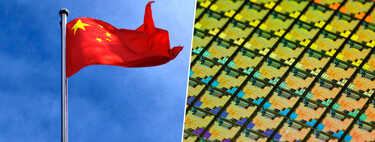
China is rapidly progressing in manufacturing advanced semiconductor chips, yet it faces a significant hurdle: the absence of its own extreme ultraviolet (EUV) photolithography equipment. This technology is crucial for producing cutting-edge chips. While China works diligently to develop its EUV capabilities, it has adopted a strategy that some may find unusual yet fundamentally rational: reverse engineering.
In his notable book, “Copycats,” Professor Oded Shenkar presented the idea that imitators can often outperform innovators. This standpoint contrasts sharply with the Western perspective, which tends to view imitation negatively. In China, however, there’s a more favorable outlook towards copying technologies. According to reports from The National Interest (TNI), this method is precisely what Chinese organizations are attempting with advanced lithography machines.
<img alt="EDA Software Development" width="375" height="142" src="https://i.blogs.es/12d391/eda-1/375_142.jpeg"/>Producing for Themselves: A Shift in Focus
Western companies historically benefited from cheap labor in China, effectively outsourcing production. Books like “Apple in China” illustrate how this has inadvertently contributed to China’s rise in technological sophistication. The ongoing trade tensions have prompted China to seek technological independence, pushing the nation to develop its own capabilities for producing advanced chips and equipment.
Recent reports highlight that a Chinese manufacturer has successfully built a prototype Deep Ultraviolet (DUV) machine, marking a crucial step towards producing more advanced chips. However, the ultimate goal remains the development of extreme ultraviolet (EUV) machines, which are pivotal for generating next-generation semiconductors. Progress in mastering DUV technology is significant, as it lays the groundwork for future advancements.
Reverse Engineering: Learning from the Best
Investigations have shown that Chinese engineers have been attempting to reverse engineer an ASML DUV photolithography machine. The intention is not necessarily to mass-produce these machines but rather to understand their intricate mechanics. This knowledge could pave the way for the development of even more advanced technologies.
However, complications arose during this endeavor. Reports indicate that while attempting to dismantle the ASML machine for examination, Chinese technicians inadvertently damaged it. This prompted an urgent call for professional technicians from ASML, who quickly discovered that the disassembly had been done in an effort to learn about the machine’s inner workings.
The Monopoly of ASML
The ASML UVE photolithography machines are recognized globally as the most intricate and advanced of their kind. Currently, the Dutch company holds a de facto monopoly on these systems, which are integral to producing cutting-edge semiconductors essential for modern devices, particularly in the realm of artificial intelligence.
The incident involving the damaged ASML machine brings forth two critical insights. Firstly, it underscores Beijing’s urgency to gain total control over chip production. Secondly, it reveals that creating these advanced machines is not merely a matter of replicating hardware; it requires extraordinary expertise in various fields, including precision optics and materials science.
Supply Chain Challenges
China boasts many brilliant engineers, but developing ASML-like machines involves navigating a complicated supply chain. For instance, the German company Zeiss SMT is a primary supplier of ultra-precise optical systems necessary for UVE and advanced DUV machinery. This dependency on external resources complicates China’s ambition to achieve self-sufficiency in semiconductor manufacturing.
A Long Road Ahead
Many industry analysts have noted the substantial hurdles that China must overcome to develop machines with advanced photolithographic technology. A recent article highlighted that achieving a “Chinese ASML” could take years, estimating a timeline of anywhere from 5 to 15 years or more. According to Didier Scemama, director of hardware research at Bank of America Global Research, while it is uncertain whether China’s offerings will ever compete with ASML’s products, they may eventually be “good enough” for the domestic market.
As global competition intensifies and nations race to advance their semiconductor technologies, the focus on self-reliance becomes all the more crucial. The drive for independence in chip production not only affects national interests but also has widespread implications for global technological dynamics, reshaping the landscape as countries innovate and adapt to ensuing challenges.
In summary, China’s persistence in reverse engineering and advancing its semiconductor capabilities could soon reshape the global chip supply landscape. While formidable obstacles remain, the nation’s efforts underscore an important shift toward self-sufficiency and a future where technological prowess plays an essential role in national strength and global competitiveness.