
Donald Trump Considers Tariffs on Mexican Lettuce Amid Health Concerns
One day after concluding the third round of reviews for the T-MEC (USMCA), President Donald Trump suggested implementing tariffs on lettuce imported from Mexico due to concerns over cyclosporiasis outbreaks linked to consumption.
The Announcement
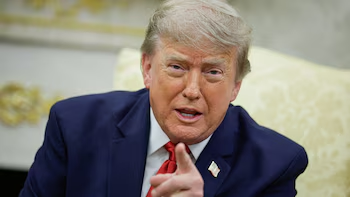
During a recent press conference held in the Oval Office, Trump addressed the situation with a mix of seriousness and humor. He stated, “I think that what we are going to do is put a big tariff on Mexico for lettuce,” indicating a potential shift in trade policy based on health concerns.
Health Department Findings
The U.S. Department of Health announced on July 23 that laboratory tests conducted on lettuce produced by Taylor Farms Mexico returned negative for the Cyclospora cayetanensis parasite that causes cyclosporiasis. This outbreak has so far led to thousands of cases of watery diarrhea reported across the United States.
Background of the Health Alerts
Following the health alert concerning cyclosporiasis, Mexican authorities conducted extensive testing. Cofepris, the Mexican health agency, analyzed numerous samples—all results confirmed no presence of Cyclospora. They also inspected the water used in the processing plant to ensure compliance with both microbiological and physicochemical standards.
Regulatory Oversight
The Ministry of Health highlighted that Taylor Farms adheres to international food safety controls, assuring traceability of their products. Moreover, no cases of diarrheal disease among workers or outbreaks within Mexico have been reported.
FDA’s Stance on Contamination
The FDA later clarified that the initial detection of Cyclospora in a Taylor Farms iceberg lettuce sample was a false positive. Further analysis showed that the signal detected did not correspond to an actual genetic amplification of the parasite. As a result, no conclusive laboratory evidence linking the contamination to any product from Taylor Farms exists.
Ongoing Investigations
Despite the FDA’s retraction, investigations into the cyclosporiasis outbreak continue. Epidemiological data still point to certain restaurants as potential transmission venues for the parasite, although the direct source of contamination remains undetermined.
Implications for Trade
Trump’s consideration of tariffs reflects a broader theme of U.S. skepticism about imported food safety amid trade negotiations. The potential tariffs could serve as a leverage point in trade talks, even as both Mexican and American health authorities continue to clear the products of contamination concerns.
Precautions and Future Measures
Following the FDA’s acknowledgment of the testing error, Taylor Farms chose to recall select iceberg lettuce batches as a precautionary measure. They reiterated that not a single positive sample has been identified in their products, stressing the importance of maintaining food safety standards.
In summary, as President Trump evaluates tariffs against Mexican lettuce imports, health agencies and the food industry work diligently to ensure food safety. This situation underscores the intersections of public health, trade policy, and international relations that will continue to evolve amid ongoing scrutiny and concern.