
Creating the First Computer Mouse
Things were clear from minute one. When Douglas Engelbart, head of the Augmentation Research Center (ARC) at Stanford, wanted to interview a new recruit, he handed him a pencil taped to a brick, asking him to write his name. “Difficult, right?” Engelbart chuckled, highlighting a critical issue—the frustrating tools available for computer interaction at the time. He was determined to create more agile and user-friendly devices.
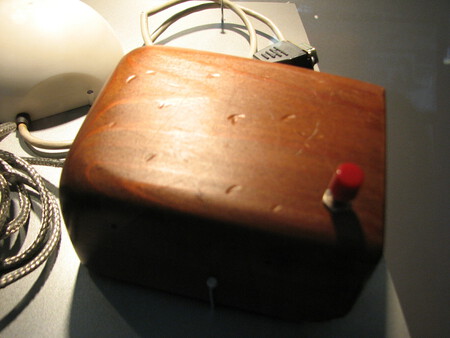
Engelbart and his engineering colleague, William English, became pivotal figures in this revolution, developing the first computer mouse in the 1960s. Dubbed the XY Position Indicator for a Display System, the original mouse was drastically different from modern designs—it was crafted from wood and featured a pair of metal wheels.
The Vision for User-Friendly Technology
In the early 1960s, Engelbart—a World War II veteran and Ph.D. graduate—had a vision for accessible and straightforward technology. Inspired by an article from inventor Vannevar Bush, he aspired to make cutting-edge technology available to the everyday user. With significant support from the Department of Defense’s DARPA, Engelbart established his research center, focusing on the future of computer communication.
At this time, computing was budding, with IBM already making strides with machines like the IBM 650. Engelbart’s team sought ways to simplify user interaction, steering away from clunky tools like the optical pencil—an outdated device akin to military radar systems.
Innovative Solutions and Prototypes
Engelbart began to brainstorm alternatives. He proposed a device with two small wheels allowing cursor movement on the screen—one for horizontal and another for vertical control. This was akin to the planimeter used by surveyors.
With DARPA’s backing, Engelbart’s team explored various mechanisms, including quirky concepts like knee-operated devices and joysticks. Ultimately, Bill English produced a prototype made from a carved redwood block featuring two wheels and a button. While officially named the XY Position Indicator, it ended up being dubbed the “mouse” for its shape and functionality.
The Groundbreaking “Mother of All Demos”
In 1968, Engelbart organized a landmark demonstration known as the “Mother of All Demos.” This 90-minute presentation showcased revolutionary computing features—live video conferencing, document sharing, and word processing. The audience, comprised of over a thousand tech professionals, was introduced to this strange new device: the mouse.
Reflecting on this pivotal moment, English noted, “In one hour, it defined the era of modern computing.” Despite the acclaim, Engelbart’s team faced challenges: funding cuts, staff turnover, and competition from emerging research centers like Xerox PARC.
The Legacy of the Mouse
Ultimately, the concepts behind the mouse were adopted by other companies. The device was integrated into the Xerox Alto computer and later popularized by Apple with the launch of the Lisa in 1983. Despite the mouse’s widespread use and influence, Engelbart received minimal financial recognition, earning only about $10,000 for his groundbreaking work.
Even years later, as technology evolved, Engelbart expressed surprise that the nickname “mouse” persisted. “I’m surprised the name has stuck,” he remarked, reflecting on the profound impact of his invention.
From clunky beginnings to a fundamental user interface tool, Engelbart’s vision transformed how we engage with computers, making technology more accessible and user-friendly for generations.