
Human Rights in Peru: A Troubling Report on Erosion and Attacks
The State of Human Rights in 2025
According to the Amnesty International Report for 2025-2026, the landscape of human rights in Peru has faced alarming challenges. There is a systematic erosion of democratic principles, driven by the reinforcement of authoritarian practices and deteriorating access to justice. This hostile environment poses significant threats to freedom of expression, the rights of women and marginalized groups, and civil liberties.
Key Trends in Human Rights Violations
The report highlights a worrying global trend of attacks on human rights, echoed within Peru. Institutional integrity has weakened significantly, with legal and political decisions exacerbating risks of impunity, censorship, and discrimination. This decline illustrates a troubling trajectory for citizens and civil society organizations in the nation.
Impact on Justice and Civil Society
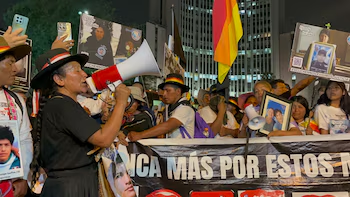
One of the pressing issues identified is the deterioration of independence within key institutions, such as the Public Ministry and the Constitutional Court. This collapse has limited Peruvians’ ability to seek justice effectively. In particular, the APCI Law, which enhances government oversight over civil organizations, has raised concerns over arbitrary state control. These restrictions disproportionately affect groups advocating for victims of human rights violations, including those suffering from state repression during protests.
Law 32419, which grants amnesty to perpetrators of severe human rights violations, directly contravenes Peru’s obligations under international law. Such measures deepen the culture of impunity, creating new barriers to justice for victims.
Press Freedom Under Siege
The report underscores an alarming decline in press freedom, with four journalists murdered and 458 attacks reported in 2025, marking it as one of the most violent years for journalism in recent history. The persistent failures to investigate these attacks have fostered environments conducive to self-censorship, undermining citizens’ rights to access information.
Violence Against Women and Marginalized Groups
The findings also indicate a critical rise in gender-based violence, with 135 femicides and over 30,000 cases of sexual violence recorded. This represents a 17% increase from the year prior, exposing substantial gaps in emergency services for survivors—only 8.2% received necessary care.
Furthermore, the approval of Law 32535, which removes gender perspectives from public policy, poses significant setbacks in addressing discrimination and violence against women.
LGTBIQ+ Rights and Challenges
LGTBIQ+ communities continue to face discrimination, particularly with measures such as Law 32331, which restricts bathroom access based on “biological sex.” Such legislation not only undermines individual rights but contradicts international human rights standards.
The Situation of Migrants and Refugees
The plight of migrants and refugees is further amplified by stigmatization from official discourse, tying them to citizen insecurity. This narrative exacerbates vulnerabilities, exposing these populations to increased violence and the threat of trafficking networks.
Conclusion: A Call for Action
The Amnesty International report paints a disturbing picture of human rights in Peru, urging urgent attention from authorities and international observers. Ensuring justice, freedom, and equality is critical for a healthier, more inclusive democracy. The world must not turn a blind eye to these violations; robust advocacy and reform are essential for restoring dignity and rights in Peru.