
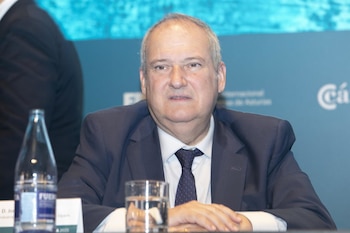
Jordi Hereu Advocates for Dialogue in Catalonia
The political landscape in Catalonia continues to evolve, marked by significant dialogue among its key leaders. Recently, the Minister of Industry and Tourism, Jordi Hereu, defended the critical dialogue taking place between Salvador Illa, the president of the Generalitat, and Carles Puigdemont, the leader of Junts. This meeting, held in Brussels, signifies a crucial step towards addressing ongoing political disputes and fostering a cooperative atmosphere among divergent political factions.
Hereu’s advocacy for dialogue aligns with a growing consensus among Catalonian leaders who believe that engaging in conversations, even in the face of differing opinions, is essential for establishing a peaceful future. “Only through the dialogue between politicians that sometimes we defend different positions can we build a framework of coexistence and therefore guarantee a future,” Hereu asserted in discussions with the press at the Ametic forum in Santander.
Importance of Political Communication
Political communication serves as the backbone of governance, especially in regions with complex political histories such as Catalonia. Recent events have underscored the importance of collaborative dialogue as a means to address critical issues facing the region. By fostering open lines of communication, leaders can work towards mutual understanding and shared solutions.
The meeting between Illa and Puigdemont is particularly significant given Catalonia’s recent turbulent past, characterized by heightened tensions surrounding independence movements and political strife. This dialogical approach represents a shift towards conflict-resolution strategies rooted in respect and understanding.
Responses from Political Barons
While Hereu’s position emphasizes the need for dialogue, not all political leaders agree with this approach. Prominent socialist figures, such as Adrián Barbón and Emiliano García-Page, have expressed reservations regarding the meeting between Illa and Puigdemont. Their skepticism reflects broader tensions within the Socialist Party concerning how best to engage with Catalan separatists and navigate the complex political landscape.
Despite their criticisms, Hereu remains steadfast in his belief that dialogue is vital. He stated that while he respects the opinions of his fellow socialist leaders, the attempt to facilitate discussions with Puigdemont should not be dismissed outright. “This meeting means a fundamental and important step to manage solutions to problems,” Hereu remarked, reiterating his commitment to constructive engagement.
The Broader Implications for Catalonia
The implications of this dialogue extend beyond the immediate political framework. As Catalonia navigates its unique challenges, the outcome of discussions between Illa and Puigdemont could pave the way for critical legislative reforms and initiatives. The success of this dialogue hinges on addressing the broader societal concerns that have fueled separatist sentiments in the past.
Moreover, building a bridge between differing political ideologies may contribute to a sense of unity among Catalans, reducing polarization and cultivating an environment conducive to progress. Hereu’s call for dialogue reflects a broader desire among many Catalonians to achieve peaceful coexistence with mutual respect, transforming the political narrative into one of collaboration rather than contention.
Future Prospects for Dialogue
Looking ahead, the potential for continued dialogue appears promising, but it will require the commitment of all parties involved. Leaders must remain open to discussing contentious issues while maintaining a commitment to democratic principles and respect for the diverse voices within Catalonia. This approach will not only reinforce the region’s political stability but also empower citizens to engage meaningfully in the democratic process.
The way forward is illuminated by the possibilities that dialogue presents; it is a chance for rebuilding trust and cooperation among leaders and constituents alike. As political tensions persist, the future of Catalonia depends significantly on the willingness of its leaders to engage with one another constructively and to embrace the diverse array of perspectives present within their society.
In conclusion, the discourse initiated by Hereu and the meeting between Illa and Puigdemont symbolize a turning point in Catalonia’s political journey. By prioritizing dialogue over division, Catalonia can navigate its challenges and work towards a more unified and prosperous future for all its citizens.