
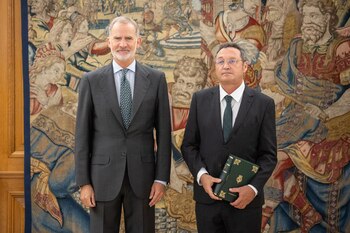
In a significant political event, King Felipe VI received Álvaro García Ortiz , the State Attorney General , at the palace of Zarzuela on a recent Wednesday. This meeting took place just two days before the monarch is set to preside over the commencement of the judicial year, an act frequently marked by ceremonial importance . However, this year’s event is marred by controversy surrounding the Attorney General’s impending judicial challenges.
The Protocol Greeting and Context of the Meeting
During their protocol greeting, a moment laden with gravity, King Felipe and García Ortiz exchanged formalities before entering discussions. García Ortiz presented the Attorney General’s Office report , which detailed the crime statistics from the last year. This annual meeting holds significance not only for its formal nature but also for the pressing issues that the judicial system faces in Spain.
Controversy Surrounding the Attorney General
The upcoming judicial year begins under a cloud of controversy due to the Attorney General’s precarious situation. Currently, he is facing imminent legal challenges, specifically related to a case involving an alleged crime of revelation of secrets against Alberto González Amador , who is linked to Isabel Díaz Ayuso, the President of the Community of Madrid . Six popular accusations have been levied against him, demanding penalties ranging from four to six years in prison, along with disqualification periods spanning from four to twelve years.
Political Backing and Public Sentiment
Notably, despite the allegations, García Ortiz appears to be receiving backing from the Government. The President, Pedro Sánchez , publicly defended him, emphasizing the lack of evidence necessary to warrant a trial. In a recent interview on TVE , Sánchez clarified that the case involves a corruption scandal affecting both García Ortiz and Ayuso’s governance and stated that the accusations of leaking sensitive information could not be substantiated.
The support from the Executive comes amid public interest and scrutiny. Sánchez’s assertion that “a trial cannot be opened without any evidence” resonates with many who remain wary of the implications of politically motivated judicial actions. However, this political stance has stirred unease among the judicial community , as some magistrates have reacted negatively to Sánchez’s comments, interpreting them as disrespectful. They argue that the integrity of the judiciary should remain separate from political influences.
Implications for the Judicial Year
This year’s judicial session promises to be tumultuous, not just due to the controversies surrounding García Ortiz, but also in the broader context of Spain’s judicial system and its perceived independence. As both King Felipe VI and García Ortiz prepare for the formal opening of this year’s judicial calendar, the backdrop of accusations against the Attorney General looms large, influencing how the judiciary is viewed by the public and international observers alike.
Looking Ahead
As they meet at the Supreme Court , where tradition dictates the formalities of the judicial year, it is clear that the proceedings will be closely monitored. With public trust in the judicial system under scrutiny, the actions taken in the coming months will be crucial in shaping the future landscape of justice in Spain. The intersection of politics and law remains a critical battleground as stakeholders cautiously navigate through the ongoing issues.
The meetings between the monarch and the judiciary ideally should serve to reinforce the foundations of justice and transparency. However, they also reveal the complexities of governance where the rule of law faces challenges both from political entities and regulatory bodies. This situation highlights the urgent need for a robust defense of judicial independence in the light of political pressures and societal expectations, a theme that will likely dominate discussions in the forthcoming judicial year.