
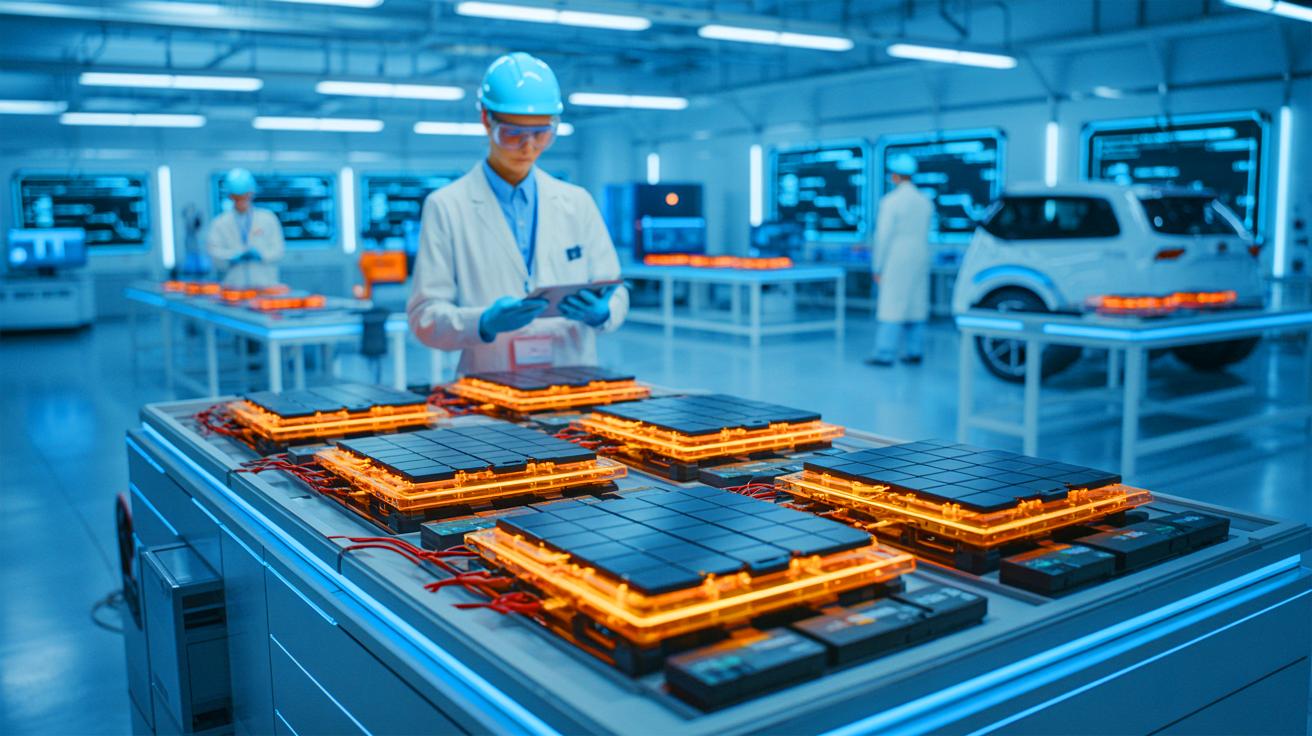
Groundbreaking Technologies in Electric Vehicle Batteries: Exploring CATL’s Latest Innovations
The automotive industry is undergoing a monumental shift towards electric vehicles (EVs), primarily driven by the need for sustainable energy. One company at the forefront of this revolution is Contemporary Amperex Technology Co., Limited (CATL). This leading battery manufacturer recently unveiled three groundbreaking technologies aimed at enhancing the performance, reliability, and safety of EVs. By tackling common consumer concerns such as range anxiety, charging times, and cold-weather performance, CATL is making strides that promise to reshape the electric vehicle landscape.
Sodium-Ion Cells: Naxtra Breakthrough
The rise in demand for lithium has led to fluctuating prices and geopolitical issues, pushing researchers to find alternative solutions. Enter sodium, an abundant and cost-effective material that positions itself as a suitable replacement for lithium. CATL’s Naxtra sodium-ion battery represents a significant leap in this technology. With a specific energy output of 175 Wh/kg, this battery is reported to offer an impressive range of approximately 500 kilometers under real-world conditions. Remarkably, this performance remains consistent even at -40°C, where the battery retains 90% of its power when only 10% charged.
In addition to its exceptional performance, the sodium-ion battery’s inherent fire-resistant properties allow CATL to remove oxygen-releasing elements from the cathode, reducing the risk of thermal runaway. This makes safety a fundamental characteristic of the Naxtra cell. Furthermore, CATL aims to provide a robust version for heavy-duty applications, including buses and trucks, that have increased resistance to harsh environmental conditions.
Dual-Power System: Freevoy Innovation
While the Naxtra focuses on materials, CATL’s Freevoy dual-power system reimagines the architecture of battery packs. It features two unique energy zones within a single unit, each designed with high and low voltage circuits, cooling loops, and safety buffers. When driving under normal conditions, the vehicle draws energy from the high-energy zone, but in scenarios involving intense acceleration or extreme weather, the system activates the secondary zone optimized for power density and low-temperature resilience.
An essential component of this technology is CATL’s innovative self-forming anode. Unlike traditional pre-lithiation methods, this new process enables the anode layers to form in situ during initial cycles, allowing for a denser packing of active materials. This promises up to 60% more volumetric energy density and 50% greater gravimetric density compared to existing battery packs. As a result, drivers can either travel further with the same volume or utilize a smaller, lighter pack for equivalent range.
Ultra-Fast Charging: Shenxing Gen 2
Charging times are a significant concern for potential EV buyers, and CATL aims to alleviate this through its Shenxing Gen 2 battery. The original Shenxing technology impressed the industry with a charging capability of 4C, but the second generation increases this capacity to 12C. This means it can accept up to 1.3 MW, enabling a charging window whereby the battery can go from 5% to 80% in just 10 minutes under moderate temperatures.
Even in colder conditions, the Shenxing Gen 2 meets the same charging speed—15 minutes from empty to 80% at -10°C. With a range of around 800 kilometers, this technology competes directly with gasoline-powered vehicles, effectively addressing one of the major hurdles in EV adoption.
Importance for American Automakers
As most EVs in North America are currently reliant on lithium-nickel cells imported from Asia, the introduction of sodium-based, dual-power systems, and rapid-charging mechanisms provides American manufacturers with an array of new options tailored for various market segments, climates, and usage cycles. This flexibility enables carmakers to adapt without substantial alterations to their existing chassis.
The advancements presented by CATL signify a transition from incremental improvements to architectural shifts in battery technology. Sodium cells aim to enhance the affordability and safety of EVs, dual-power packs promise high performance akin to sports cars with extensive range, and ultra-fast charging capabilities can diminish wait times to mere moments.
Conclusion: Implications for the Future
While CATL supplies battery technology to Tesla’s Shanghai facility and has licensed its innovations to Ford for a planned U.S. battery plant, integrating this technology into American assembly lines is fraught with challenges. Tariffs, geopolitical scrutiny, and evolving domestic requirements under the Inflation Reduction Act complicate matters. Regulatory agencies mandate real-world testing data to ensure safety, and national charging networks must advance to support megawatt-level currents.
As we look to the future of electric vehicles, the innovations from CATL will be pivotal in determining the direction and pace of this industry. With these promising technologies, CATL is poised to significantly impact the global landscape of electric vehicles, setting new standards for performance, safety, and environmental sustainability.
| EN BREF |
|
Recent technological advancements from CATL promise to transform the landscape of electric vehicles (EVs). With the deployment of three major innovations, this battery manufacturing giant aims to overcome the common challenges faced by EV owners such as range anxiety, performance in winter conditions, and prolonged charging times. These innovations include sodium-ion Naxtra cells, the dual-power Freevoy system, and the next-generation ultra-fast charging Shenxing battery, each targeting the main pain points of EV users.