
The End of an Era: Acknowledgment of Rivalry
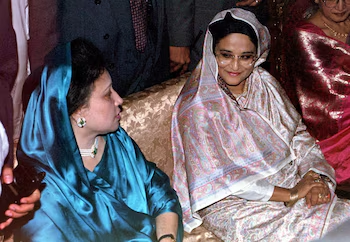
Former Prime Minister of Bangladesh, Sheikh Hasina, recently bid farewell to her historical rival, Khaleda Zia, with a message of conciliation, bringing an end to the long-standing “Battle of the Begums.” This personal dispute has shaped the political landscape of Bangladesh for decades.
Hasina recognized Zia’s significant contributions to the nation, especially as the first female Prime Minister and her efforts in the struggle for democracy. This departure from a historically adversarial rhetoric marks a profound shift, underscoring the complexities of their relationship.
Khaleda Zia: A Legacy Remembered
In a statement from exile, Zia described her passing as a “profound loss for the political life of Bangladesh,” extending condolences to her party, the Bangladesh Nationalist Party (BNP), and its current leader, Tarique Rahman. Zia’s death closes an intense chapter of political rivalry that divided Bangladeshi society.
Political Imprisonment and Exile
Khaleda Zia’s life in exile comes after years of judicial pressure and imprisonment under Hasina’s government. Throughout their rivalry, Zia faced numerous legal challenges, often viewed by her supporters as politically motivated. In contrast, Sheikh Hasina, now in hiding due to a death sentence and repercussions from protests, reflects the shifting political tides in Bangladesh.
The Fallout of the “Battle of the Begums”
The rivalry led to severe political polarization, as supporters of each leader clashed vehemently. Ultimately, Zia endured her judicial battles while Hasina’s Awami League faced accusations of increasing authoritarianism. Notably, in the turbulent political climate leading to 2024, Zia’s release came only after the fall of Hasina’s regime, following massive civil unrest.
Final Reflections: A Complex Relationship
Hasina concluded her message by praying for Zia’s eternal rest and forgiveness. This gesture, though significant, raises questions about reconciliation in a politically fragmented Bangladesh. Past tensions remain palpable, with each leader’s supporters retaining strong sentiments about the events leading up to Zia’s imprisonment and Hasina’s ascent.
As Hasina faced criticism for her government’s actions against Zia, the emergence of new political dynamics invites speculation about the future of Bangladeshi politics. The legacy of these two women continues to resonate deeply, illustrating the intricate dance of power and rivalry in a nation navigating through its democratic journey.
(with information from EFE)