
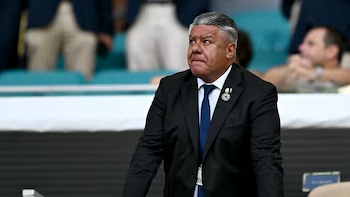
Judicial Action Against AFA President Claudio “Chiqui” Tapia
The legal scrutiny surrounding Claudio “Chiqui” Tapia, president of the Argentine Football Association (AFA), is intensifying. Recent developments indicate that the judicial system is taking a closer look at allegations of financial misconduct, specifically regarding the misappropriation of pension contributions.
Lifting of Financial Secrecy
Economic criminal judge Diego Amarante has ordered the lifting of both fiscal and stock market secrecy for Tapia. This landmark decision signifies a move toward transparency in a case that could have profound implications for the governance of Argentine soccer. By accessing Tapia’s financial records, the authorities hope to uncover relevant information about the alleged misuse of funds that are supposed to support retirements for those in the football community.
Implications for AFA Leadership
This judicial measure extends beyond Tapia. Pablo Toviggino, the treasurer of the AFA, along with other board members, will also have their financial confidentiality lifted. The investigation raises critical questions about how the AFA has been managing its financial responsibilities and whether its leaders have been acting in the best interests of the organization and its stakeholders.
The Broader Picture
The AFA, being the governing body of football in Argentina, is responsible for a range of essential functions, including the management of funds contributed for pension plans. Mismanagement of these contributions could not only jeopardize the welfare of many former football players but also tarnish the image of the association as a whole. This has stirred public interest, as football is deeply woven into the fabric of Argentine culture, making any scandal particularly impactful.
The Ongoing Investigation
While details remain sparse, the investigation continues to unfold, and the public is eagerly awaiting further announcements. The lifting of financial secrecy could lead to significant revelations about the inner workings of the AFA and the accountability of its leadership.
The legal proceedings underscore an essential need for transparency and governance in sports organizations, especially when public funds and community investments are at stake. This case will likely serve as a precedent for future evaluations of financial conduct within sports administrations in Argentina.
What’s Next?
As the investigation progresses, the spotlight will remain on Tapia and his associates. The outcomes could affect not only their individual fates but also the broader infrastructure of Argentine football. Stakeholders and fans alike will be watching closely, hoping for accountability and reform in an organization that plays such a vital role in the nation’s identity.
Conclusion
The developments regarding Claudio “Chiqui” Tapia are just the beginning of what could be a transformative moment for the AFA and Argentine football as a whole. As this story evolves, the implications for governance, financial ethics, and accountability in sports will come into sharper focus, sparking discussions that go beyond the football field.
The unfolding drama invites powerful reflections on leadership, responsibility, and the integral role that transparency plays in public institutions—a crucial aspect that sports organizations worldwide must continually embrace.