
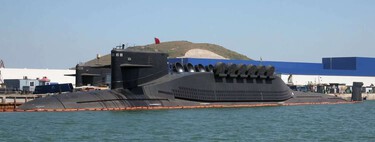
China is currently in a celebratory mood, marking the 80th anniversary of its victory over Japan and the end of World War II . This commemoration was spectacularly showcased on September 3 , when Beijing transformed the iconic Tiananmen Square into a grand stage for a military parade featuring over 10,000 military personnel . The event lasted about 70 minutes and was officially highlighted as unprecedented, mainly due to the unveiling of cutting-edge weaponry that had not been publicly displayed before.
This military exhibition brings into sharp focus China’s trajectory toward achieving military self-sufficiency and its potential to reshape order in the Pacific . The situation is particularly sensitive, especially in light of recent tensions involving Japan and notably Taiwan . Observers are acutely aware of the implications this has on regional stability.
In response, the United States has promptly announced its intentions to deploy the advanced Typhon missile system to Japan . This deployment will coincide with the joint Resolute Dragon exercises scheduled to run from September 11 to 25 . The purpose of these exercises is to fortify defenses of remote islands within the Japanese archipelago, reflecting an intensified collaborative military stance between the U.S. and Japan.
Resolute Dragon and the Typhon Missiles in Japan
During these pivotal exercises, both Japan’s Self-Defense Forces and the U.S. Marines will coordinate efforts to bolster their response capabilities in anticipation of potential hostilities. The U.S. contribution to this year’s Resolute Dragon is notably anchored in the deployment of the Typhon missile platform .
The Typhon system , also known as the Mid-Range Capability (MRC) , is a mobile platform housed in standard containers. It is engineered to launch both Tomahawk missiles and SM-6 interceptors. The Tomahawk missiles are subsonic and can execute precision strikes on land or naval targets from a distance ranging between 1,500 to 2,400 kilometers . On the other hand, the SM-6 missiles primarily focus on aerial defense and have a shorter range of 240 kilometers .
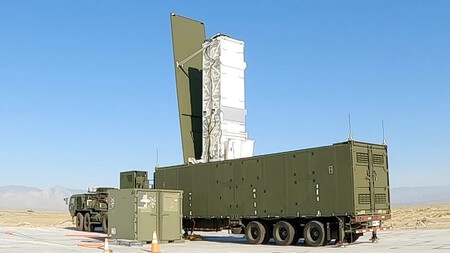
The Typhon system is versatile in that it can be transported by land, sea, or air. While there are no imminent plans to launch any missiles, the mere presence of the Typhon has been interpreted as a direct challenge to China.
According to a statement from a spokesman for the Japanese forces, as reported by Reuters , the U.S. Typhon unit’s presence is intended to be temporary during the exercises. However, this assertion has been met with skepticism from Guo Xiaobing , the director of the Center for Weapons Control Studies of China . He cautioned against trusting the temporary nature of this deployment, citing past instances where similar U.S. facilities remained long after their initial deployments.
“These movements not only increase the surveillance of neighboring countries but also represent hidden dangers for Japan’s own security” – Guo Xiaobing.
Guo views this military maneuver as detrimental to regional strategic stability , asserting it undermines the security interests of neighboring nations. Furthermore, he emphasizes that if tensions escalate into a conflict with the U.S., it could drag Japan into a precarious situation.
This concern is echoed by Russia , whose government has criticized the U.S. actions. Maria Zakharova , a spokesperson for the Russian Ministry of Foreign Affairs, labeled the deployment as a destabilizing step that threatens Russia’s strategic posture in the region.
Throughout 2023, Japan has notably shifted its longstanding demilitarization policies by expanding its military budget significantly. This change has prompted unease within China, with recent assessments suggesting that both China and Russia view Japan’s military augmentation as an alarming development.
The Typhon system previously participated in logistics maneuvers in the Philippines and Australia , including a successful live-fire test of the SM-6 missile against a maritime target, demonstrating its operational capabilities.
In this intricate dance of geopolitical tensions, the 80th anniversary of the end of World War II serves as a stark reminder of the historical complexities that continue to influence present-day relations and military strategies.