
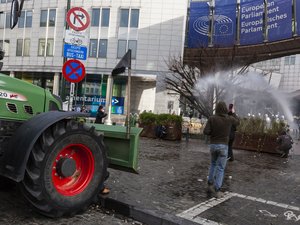
While tensions simmer in Brussels, farmers are voicing their discontent over the postponed signing of the EU-Mercosur trade agreement, a deal intended to connect the European Union with Mercosur countries: Argentina, Brazil, Paraguay, and Uruguay. This protest, with nearly 10,000 farmers participating—4,000 of whom were French—reflects growing opposition to the agreement amid concerns over its implications for local agriculture.
## Farmers Take to the Streets
On a notably heated Thursday, Brussels saw a convergence of farmers demonstrating against the free trade agreement that has been under negotiation since 2000. The protests, spearheaded by the FNSEA (National Federation of Agricultural Workers), escalated into clashes with police as the farmers marched with their tractors around the EU headquarters. However, calm returned later in the day, giving European leaders, including French President Emmanuel Macron, a slight breather amid growing dissatisfaction.
## Macron: “The Account Is Not There”
President Macron has publicly reiterated France’s position against the current terms of the trade agreement, stating, “the account is not there.” This statement underlines France’s unwillingness to sign the deal in its present form, marking a significant stance as EU leaders, including European Commission President Ursula von der Leyen, were poised to finalize the agreement over the weekend. Macron’s declaration reinvigorates France’s call for a delay in the process, emphasizing the importance of addressing farmers’ concerns.
## Italy’s Support: Meloni Steps In
Adding another layer to the controversy, Italian Prime Minister Giorgia Meloni has officially requested a postponement of the signing, aligning Italy with France’s opposition. By reaching out to Brazilian President Lula, who represents the Mercosur bloc, Meloni has created a united front with France on this pivotal issue. Her intervention increases the chances of delaying the agreement, given the significant leverage Italy possesses within the EU context.
## A Wait and See Approach
During a conversation with Meloni, Lula addressed the request for patience, suggesting that a short pause—“a week, ten days, a month”—might help in achieving Italian support for the agreement. This statement highlights the complicated dynamics within Mercosur regarding the future of the agreement. It places the onus back on the member countries to deliberate further on the implications of their decisions.
### Agricultural Unions in Focus
In light of the ongoing tensions, French Prime Minister Sébastien Lecornu is set to meet with agricultural unions to address their grievances directly. The meetings aim to mitigate the unrest and explore potential resolutions to the crisis. Concurrently, Lecornu is addressing urgent issues affecting farmers, including the recent lumpy skin disease that has led to the euthanization of livestock.
## Confirmation of Postponement
As the day concluded, news broke of the agreement being postponed until January. This announcement came from Ursula von der Leyen following a summit of the 27 EU member states, indicating the failure to secure a qualified majority amid dominant opposition from both France and Italy.
## Disappointment in Mercosur
The delay will undoubtedly disappoint the Mercosur countries, who have been negotiating the trade agreement for over two decades. However, the discontent is not isolated; various European economic players, including French wine and spirits professionals, are also vocal about their support for the agreement. They view it as a crucial opportunity to open new markets and eliminate existing tariffs, which range from 20% to 27%.
As the situation develops, stakeholders on both sides will continue to grapple with the implications of this postponed agreement, further complicating the future of agricultural trade between Europe and South America.